
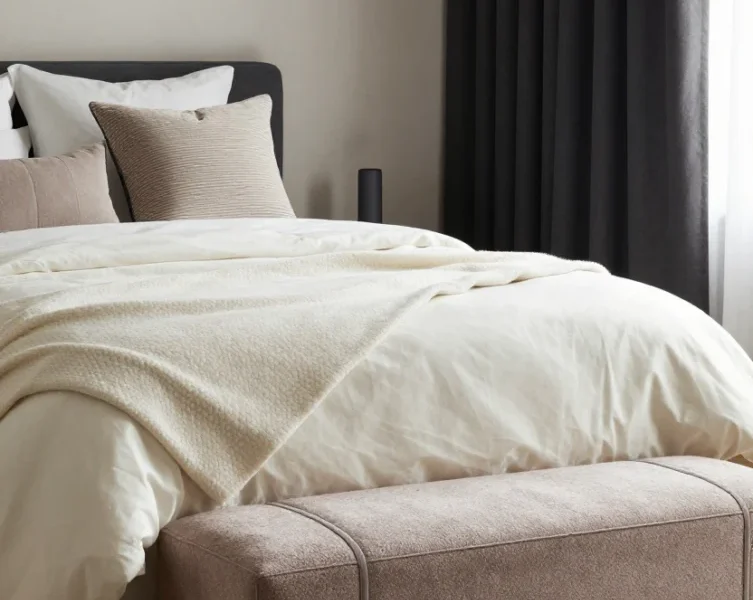
Your bedroom should feel like a sigh of relief the moment you cross the threshold. The smartest small spaces don’t sacrifice luxury— they amplify it with thoughtful layers and striking details. Below, you’ll find elevated, editor-approved ideas to create a truly inviting retreat with 12 cozy small bedroom ideas that feel like a dream room.
Whether you’re outfitting a studio nook or a compact primary suite, the goal is simple: maximize comfort, control the visual noise, and elevate every inch with proportion, texture, and light. These strategies blend high-impact styling with practical space planning so your room looks polished—and lives beautifully.
1. Anchor The Room With A Tailored Bed And Luxe Bedding
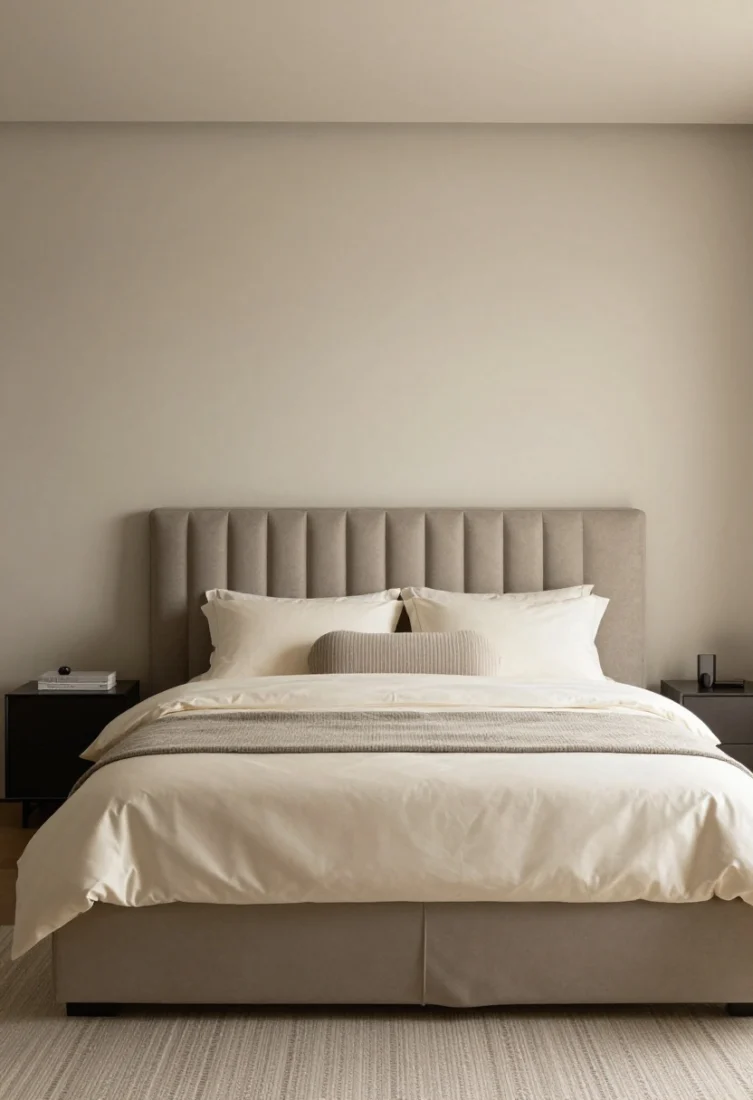
The bed is your focal point and the largest plane of color and texture. Choose a slim, upholstered headboard with clean vertical or channel tufting to add soft height without overwhelming the footprint. A low-profile bed frame keeps sightlines clear and elongates the room, while a slightly taller headboard draws the eye upward, creating perceived volume.
Which Home Upgrade Does Your Space Really Need?
Answer 5 quick questions to discover the ideas that will work best for your home.
Why it works: Anchoring with a strong yet streamlined silhouette establishes visual order. Luxurious bedding—think percale sheets, a sateen duvet, and a textured throw—introduces layered tactility. A controlled palette calms the eye, and a restrained pattern (pinstripes, micro-checks) provides subtle contrast without clutter.
- Opt for breathable, high-thread-count sheets and a lofty duvet in a neutral or tonal scheme.
- Add one statement lumbar pillow instead of a pile to keep things elegant and airy.
- A bed skirt with a crisp kick pleat can hide storage beneath while maintaining polish.
Shop cues: Upholstered headboards, platform beds, luxury bedding, decorative pillows.
2. Build A Layered Lighting Plan For Warmth And Depth
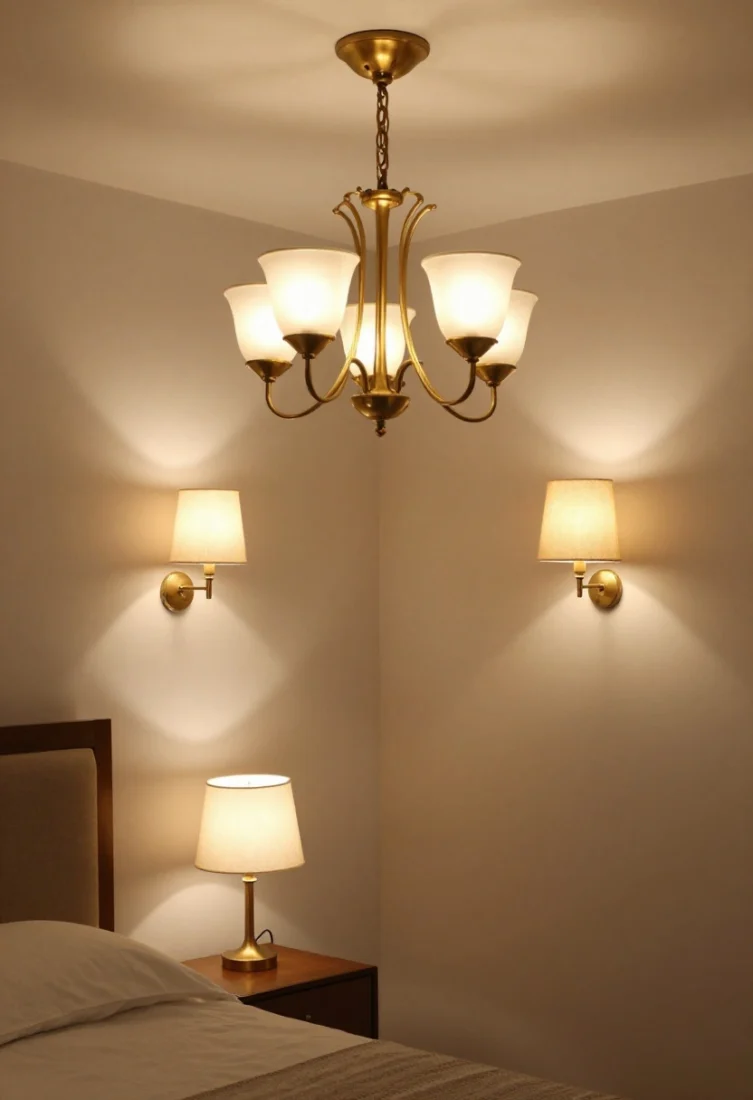
Small rooms shine when lighting is multi-source and dimmable. Combine a ceiling fixture (flush mount or petite chandelier), wall sconces, and low-glow bedside lamps. If surface area is tight, consider plug-in sconces or swing-arm lights to free up the nightstand.
Why it works: Layered light eliminates harsh shadows and flatness, which can make a compact space feel cramped. Warm temperatures (2700–3000K) flatter skin tones and textiles, while diffused shades create a soft halo that enhances coziness. Position lighting at different heights to sculpt dimension.
- Choose fabric or frosted glass shades to diffuse light and soften edges.
- Install dimmers for nighttime unwinding and early-morning ease.
- Coordinate finishes (antique brass, matte black) for a cohesive jewelry-like effect.
Shop cues: Flush mounts, wall sconces, table lamps, dimmer switches.
3. Embrace A Tight, Tonal Palette With Nuanced Neutrals
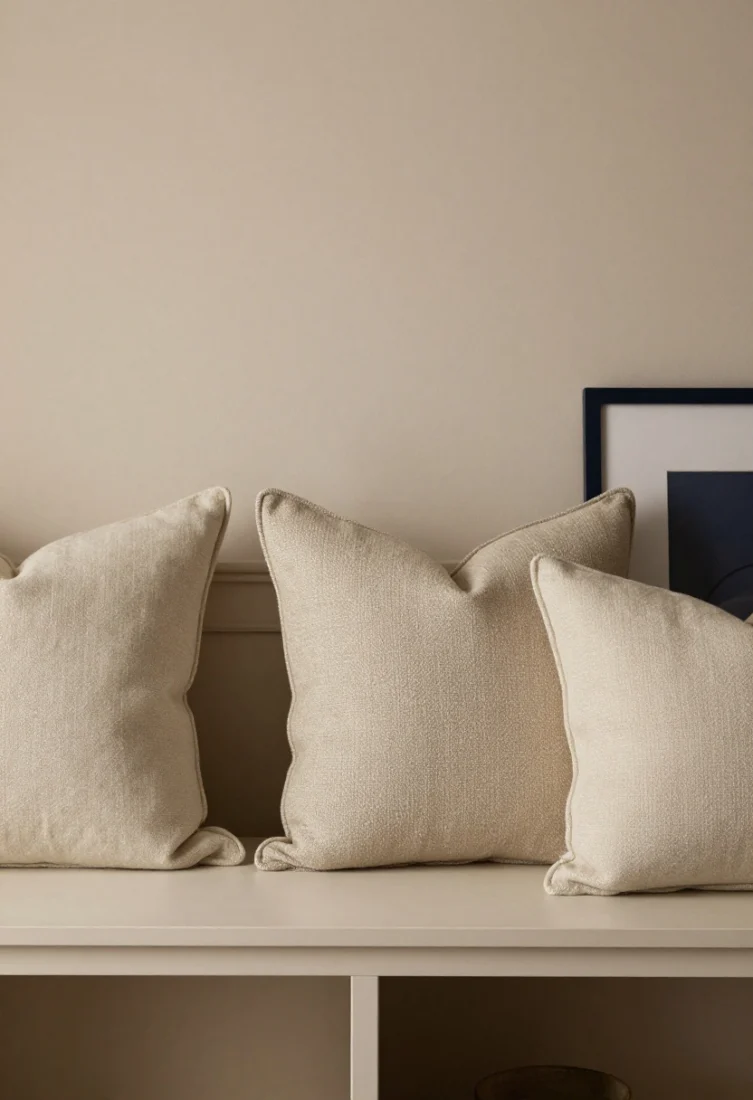
Limit your palette to two main hues and one accent—the discipline pays off. Creams, mushroom grays, warm taupes, or soft olive create a soothing canvas. Add micro-contrasts through materials rather than more colors: bouclé against linen, matte paint near eggshell sheen, wood next to ceramic.
Why it works: A refined tonal approach reduces visual fragmentation, increasing the sense of flow. Textural variety delivers interest without shouting. Small rooms benefit from repeated color notes, which knit disparate elements together.
- Use a paint color on walls and a half-shade deeper on trim for quiet depth.
- Repeat metal finishes at least twice to look intentional, not accidental.
- Introduce one rich accent—like inky navy or merlot—on a pillow or art frame.
Shop cues: Paint, wall coverings, throw pillows, ceramic accessories.
4. Upgrade Window Treatments For Height And Softness

Hang drapery high and wide to stretch the room vertically and horizontally. Floor-grazing panels in linen or velvet add luxe softness and improve acoustics. If privacy is key, layer sheer shades or lightweight Roman blinds behind the panels for a tailored, hotel-like look.
Why it works: Extending rods beyond the window frame tricks the eye into seeing a broader opening, while pooling fabric adds movement and sophistication. Layers control light precisely and boost insulation, creating a cocooning effect.
- Mount rods 6–10 inches above the window and 6–8 inches beyond each side.
- Choose lining for drapery to improve drape and reduce glare.
- A subtle tape trim or contrast hem offers polish without fuss.
Shop cues: Curtain panels, Roman shades, drapery hardware.
5. Choose Nightstands That Work Hard—And Look Elevated
🎯 Discover Your Home Decor Style
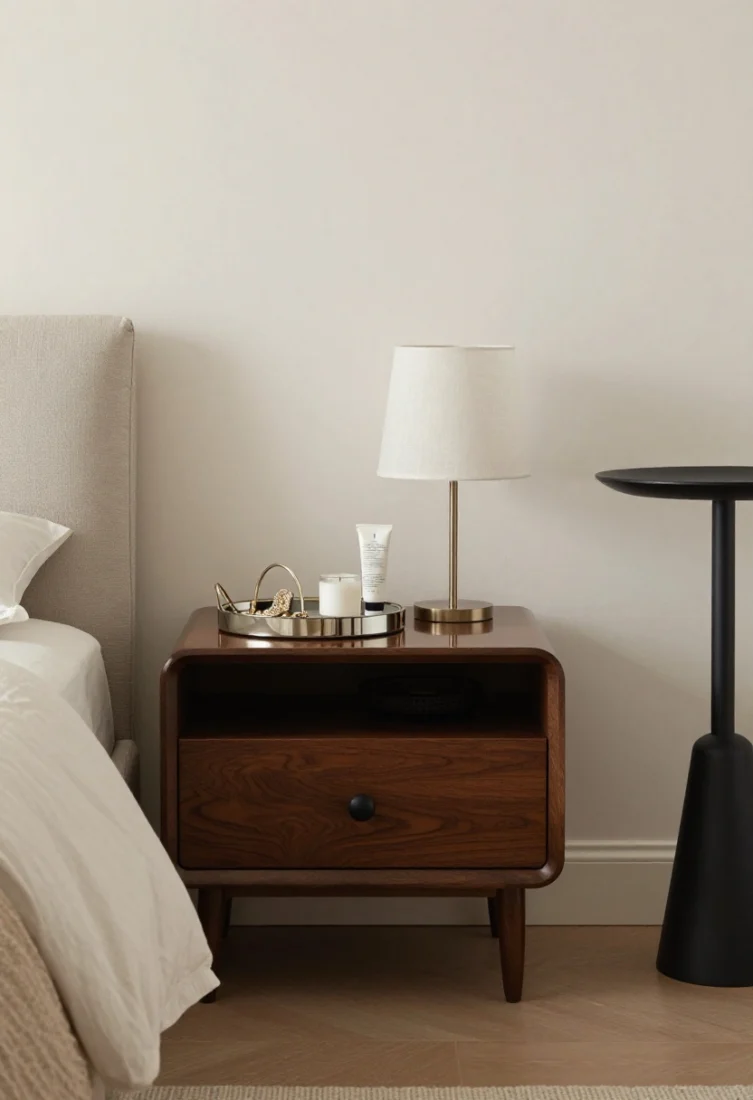
Scale is everything. Opt for a nightstand slightly lower than your mattress top for comfort and visual harmony. Closed storage (a drawer or two) hides essentials; an open shelf keeps a book or basket accessible without clutter. If space is ultra-tight, consider a floating shelf or a slim pedestal table.
Why it works: Balanced proportions create ease and elegance, while concealed storage calms the eye. Rounded corners or oval tables keep circulation smooth and reduce visual heaviness.
- Mirror or lacquer finishes bounce light and visually lift the piece.
- Match your lamp scale to the table’s footprint—oversized shades overpower petite tops.
- Use a tray to corral jewelry, hand cream, and a candle—functional and chic.
Shop cues: Nightstands, floating shelves, trays, storage baskets.
6. Layer A Perfectly Sized Rug To Ground The Composition
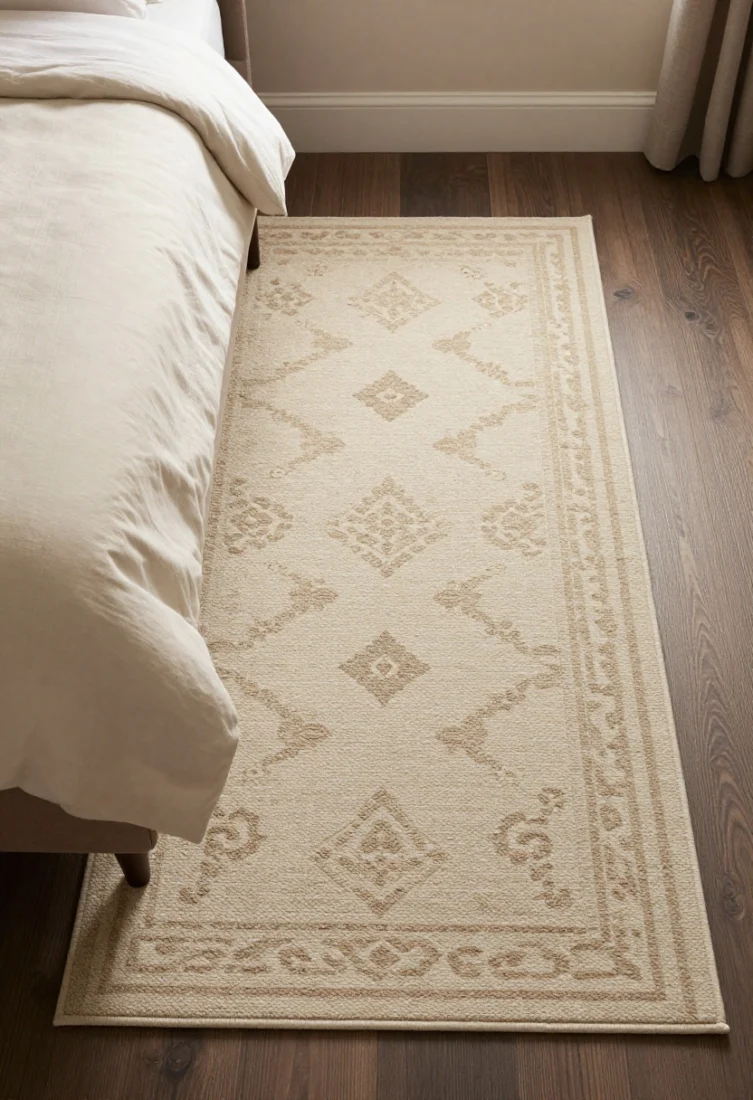
A rug defines the zone and adds tactile comfort. In a small bedroom, let the rug extend at least 18–24 inches beyond each side of a full or queen bed. If budget or layout is tricky, use two runners flanking the bed or a plush mat at the foot to frame the area.
Why it works: Grounding the bed with a rug balances negative space and keeps the room from feeling “floaty.” Texture underfoot—wool, silk-blend, or dense cotton—ups the cozy factor. Pattern can be subtle (tonal Moroccan) or precise (small-scale geometric) to add rhythm.
- Stick to low- to medium-pile for ease of vacuuming around tight corners.
- Use a quality rug pad to prevent slipping and to add a cushioned step.
- Choose colors that echo the bedding to unify the vertical and horizontal planes.
Shop cues: Area rugs, runners, rug pads.
7. Use Wall-Mounted Storage And Slim Profiles To Free Floor Space
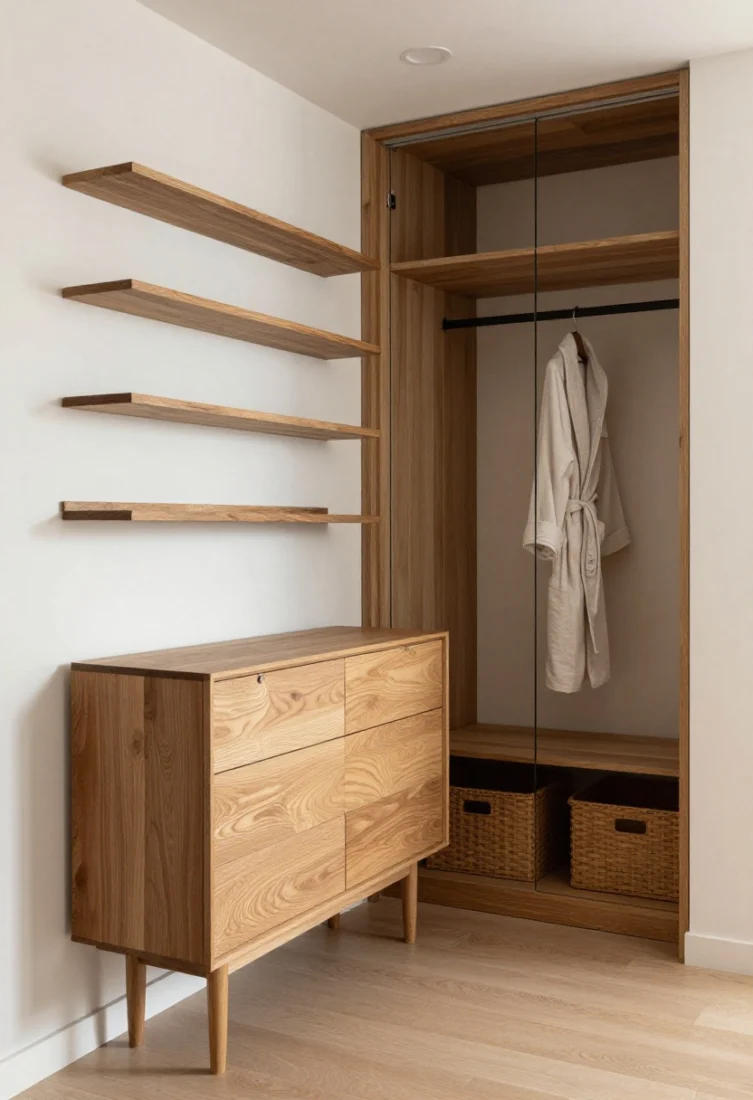
Think vertical. Wall-mounted shelves, floating consoles, and compact wardrobes keep pathways clear. A narrow dresser on tall legs maintains airflow and looks lighter than boxy storage. If closets are minimal, consider a wardrobe with mirrored doors to bounce light.
Why it works: Lifting storage off the floor reveals more visible baseboard and flooring, which creates the illusion of more square footage. Slim silhouettes respect the room’s proportion and enhance circulation.
- Choose a single wood tone for major pieces to keep the look cohesive.
- Use baskets inside open shelving to hide miscellany and streamline the view.
- Mount hooks or a valet peg rail for robes and tomorrow’s outfit—elevated utility.
Shop cues: Floating shelves, slim dressers, wardrobes, storage baskets, wall hooks.
8. Add Architectural Interest With Headboard Walls And Texture
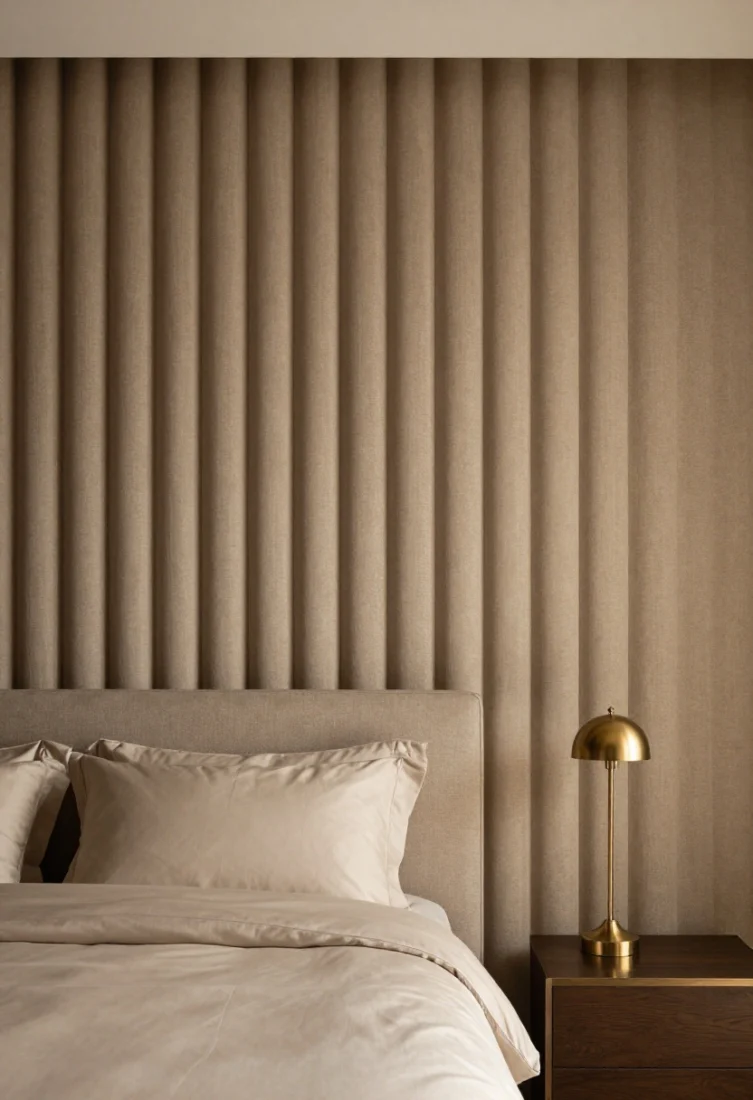
When you can’t remodel, simulate architecture through finishes. A softly textured wallpaper, narrow beadboard, or fluted panel behind the bed adds dimension with minimal depth. Keep it tone-on-tone to remain restful, or introduce a subtle sheen for low, evening glamour.
Why it works: Texture catches light and shadow, bringing quiet drama without visual clutter. A defined headboard wall also creates a focal anchor, making the rest of the room feel organized.
- Try grasscloth for organic warmth or a linen-effect wallcovering for tailored refinement.
- Extend treatment to the ceiling for a cocoon-like vibe in particularly small rooms.
- Balance tactile walls with smooth bedding and refined metal accents.
Shop cues: Wallpaper, beadboard panels, decorative molding.
9. Curate Art And Mirrors With Purposeful Scale
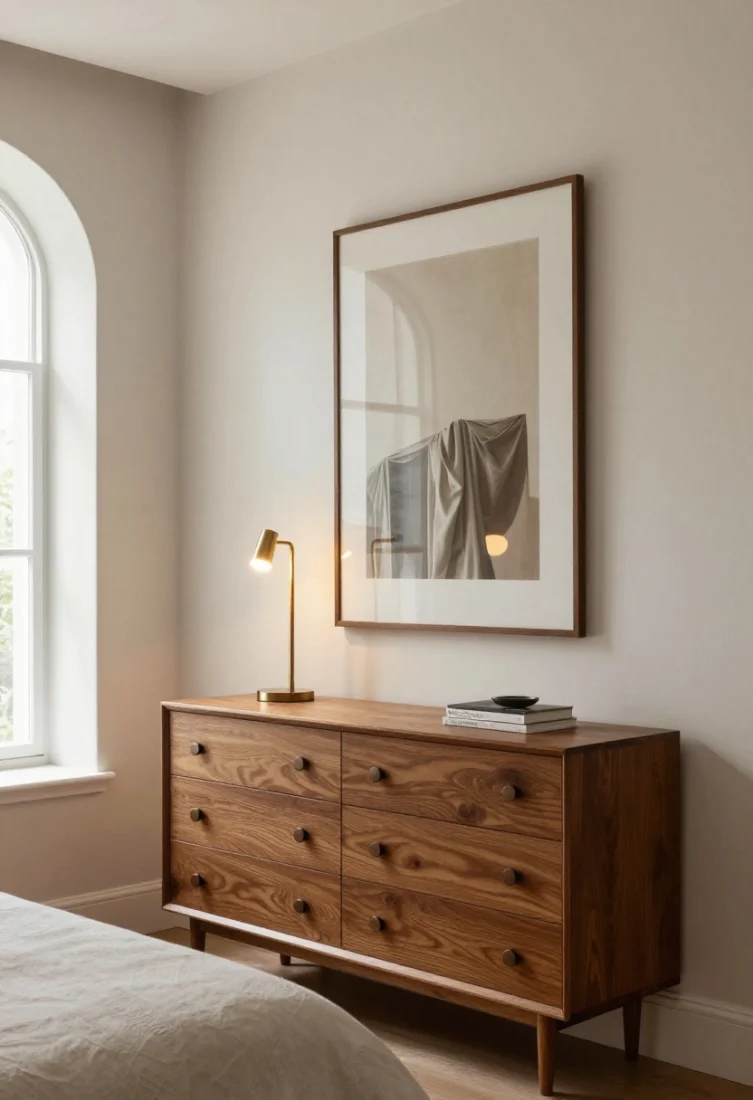
Choose one commanding piece above the bed or a tight diptych over the dresser to avoid visual scatter. A large, elegant mirror—arched or rectangular—placed opposite a window brightens and expands the space. Keep frames consistent to maintain rhythm.
Why it works: Overscaling a single artwork reduces clutter and makes the room feel designed, not decorated. Mirrors strategically placed manage light and extend sightlines, especially vital in narrow rooms.
- Use art with soft, atmospheric tones for serenity; reserve high-contrast graphics for small doses.
- Hang mirrors to reflect something beautiful—drapery, a lamp, greenery.
- A picture light above the art adds a luxe, gallery note and warm glow.
Shop cues: Framed art, mirrors, picture lights, wall decor.
10. Edit The Nightly Ritual: Surfaces Styled, Not Stuffed
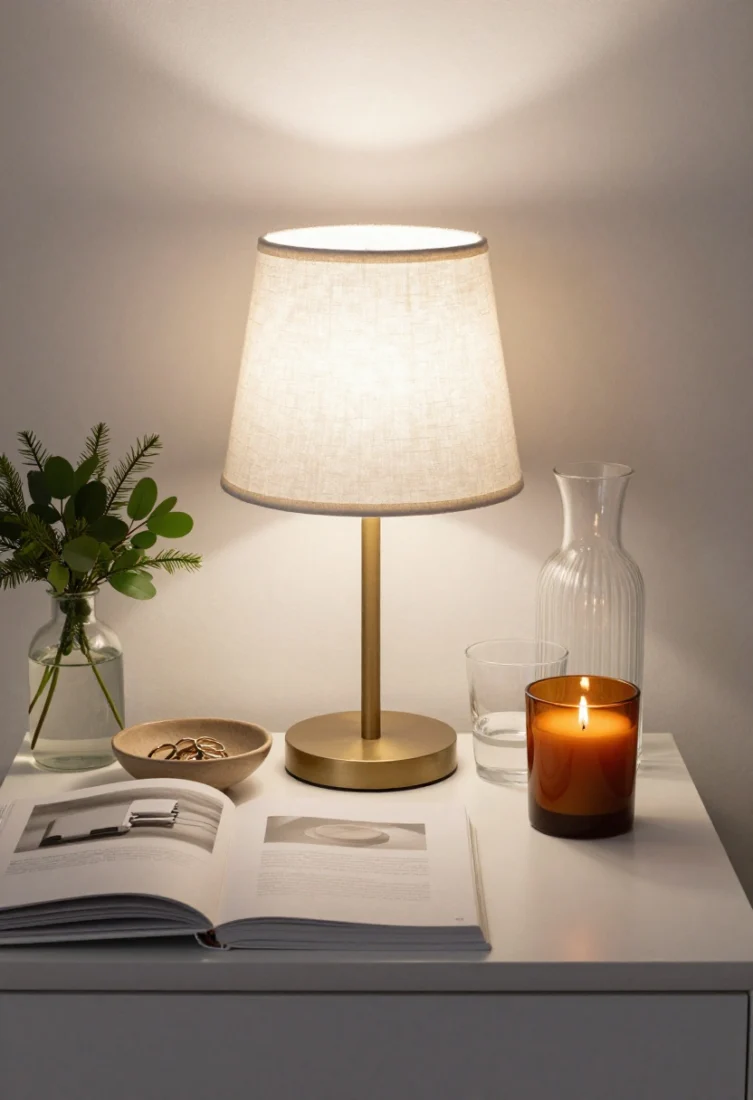
Clutter kills coziness. Restrict bedside surfaces to a short stack: lamp, small vase or candle, carafe, and a book. Stash everything else in drawers or bins. A bowl for rings and a lidded box for chargers keep the look intentional and easy to maintain.
Why it works: Editing sharpens the room’s visual language and supports a sleep-ready mindset. Negative space is a luxury—leave some breathing room on every surface to prevent visual fatigue.
- Install a small charging station inside a drawer to hide cords.
- Rotate florals or branches weekly for a fresh, sensory moment.
- Choose a signature scent—amber, cedar, or linen—to cue relaxation.
Shop cues: Decorative boxes, trays, candles, carafes.
11. Prioritize Quiet Luxury Textiles For Sensory Comfort
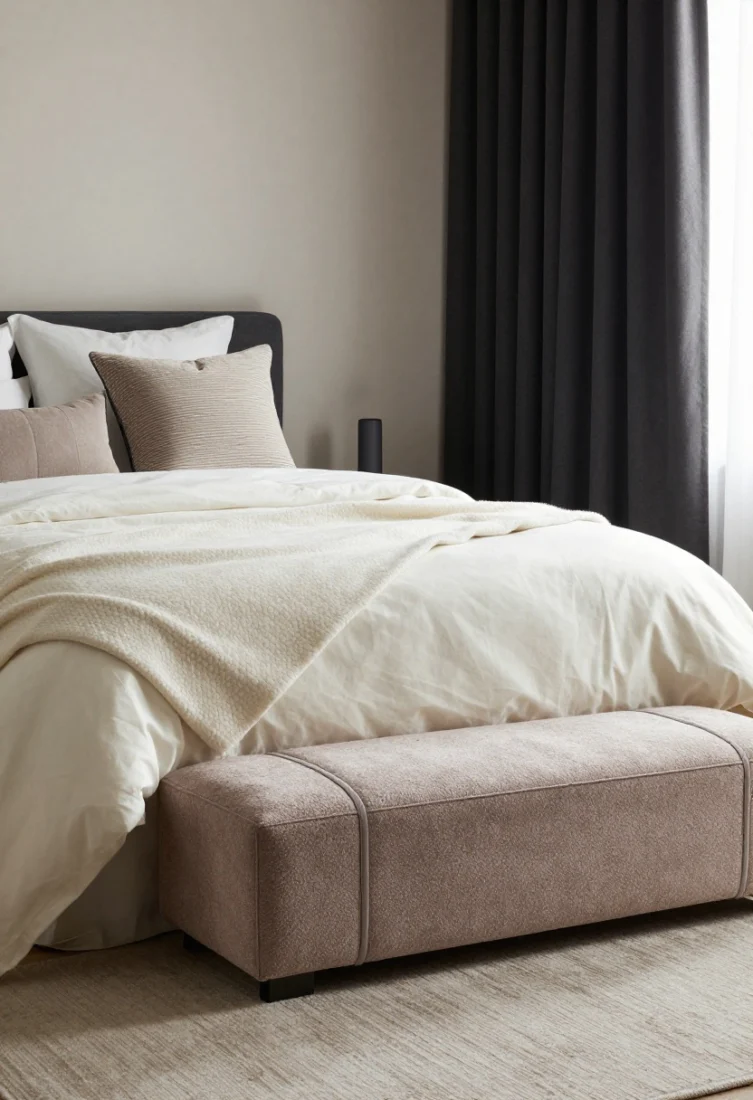
Think tactile harmony from headboard to floor. Combine a nubbly throw with a cashmere blanket, linen or percale sheets, and a plush rug. Add a bouclé or velvet bench at the foot if space allows; if not, a petite ottoman can substitute while doubling as extra storage.
Why it works: Sensory layering elevates a small room from basic to boutique. Contrasting textures—matte cotton against lustrous velvet, smooth leather with soft wool—create depth without color chaos.
- Keep patterns gentle and scale-conscious; small spaces favor restrained motifs.
- Use tonal piping or contrast welting on pillows for couture detail.
- Blackout lining on drapery improves sleep and gives fabric a rich hand.
Shop cues: Throws, blankets, pillows, benches, ottomans.
12. Design Smart Floor Plans And Concealed Storage Solutions
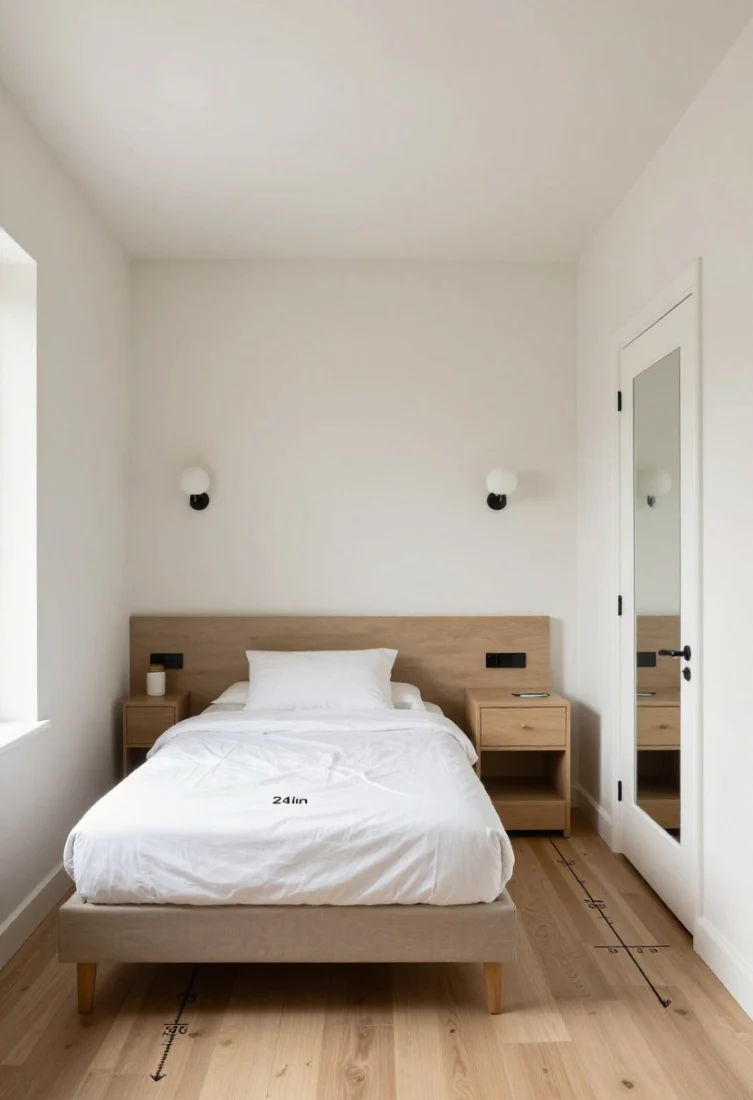
The chicest small bedrooms function effortlessly. Map traffic patterns: at least 24 inches of clearance where possible. Place the bed on the longest uninterrupted wall; if off-center, balance with symmetrical sconces or matched side tables. Use underbed storage bins or a lift-up ottoman for seasonal linens.
Why it works: Good planning makes luxury livable. Balanced symmetry around the bed calms the eye, while concealed storage protects the room’s serenity by removing visual busyness.
- Pick a dresser width that leaves a comfortable pathway—avoid pieces that “pinch” the room.
- Opt for a door-mounted mirror to reclaim wall space if closets are shallow.
- Consider pocket or sliding doors where renovations allow to improve flow.
Shop cues: Underbed storage, closet organizers, slim dressers, sliding door hardware.
What To Avoid In A Small, Cozy Bedroom
- Overly busy color palettes or too many competing finishes.
- Bulky nightstands or lamps that dwarf the bed.
- Harsh, cool lighting that flattens texture and feels clinical.
- Open storage without baskets or boxes—visual noise accumulates fast.
Quick Styling Add-Ons That Make A Big Difference
- A petite bench or stool at the foot of the bed for putting on shoes.
- A sculptural table lamp that doubles as a statement piece.
- One substantial plant or branch arrangement for organic scale.
- A framed textile or serene landscape to reinforce the restful palette.
Suggested Categories To Explore
Rugs, lighting, storage, wall decor, benches and ottomans, bedding, window treatments, mirrors, and decorative accents.
Putting It All Together
Start with the bed and grounded rug, layer in a tight palette, and build a tiered lighting scheme. Add storage that respects circulation, then finish with luxe textiles and curated art. Prioritize quality over quantity—one exceptional lamp, a perfectly tailored headboard, or a textured wall can transform the whole room.
Conclusion
Creating a cozy small bedroom that feels like a dream room isn’t about shrinking your ambitions—it’s about sharpening them. With disciplined color, layered lighting, sumptuous texture, and furniture scaled with intent, your compact space can deliver boutique-suite comfort every night. Edit thoughtfully, invest in tactile quality, and let every choice earn its place.
FAQ
How do I make a small bedroom look bigger without going all white?
Use a tight, tonal palette in warm neutrals or soft color, then introduce contrast through texture—bouclé, linen, matte metals—rather than more hues. Add mirrors to extend light and keep major furniture on slender legs.
What size rug works best under a queen bed in a small room?
Aim for an 8×10 rug if possible, with at least 18–24 inches visible on the sides and foot. If that’s tight, use two runners on either side or a 6×9 placed horizontally with generous coverage at the foot.
Can I use dark paint in a small bedroom?
Yes—deep, enveloping tones can feel luxuriously cocooning. Balance them with lighter textiles, warm lighting, and reflective accents like brass or mirrored finishes to prevent the space from feeling heavy.
Recommended Products
Disclosure: As an Amazon Associate, this site may earn from qualifying purchases.
These affiliate-ready categories are broad, safe shopping prompts readers can use to build the look without fake pricing or made-up reviews.
- Tailored Bed — Anchors the room and adds soft height.
- Layered Lights — Creates warm, dimmable depth in small spaces.
- Elevated Drapery — Adds height, softness, and precise light control.
- Grounding Rug — Defines the bed zone and boosts coziness.
- Slim Storage — Frees floor space and reduces visual clutter.
Shop the Look on Amazon: Give readers a fast path from inspiration to action.
Find Your Style
Answer each question to unlock a quick designer tip for your space.
1. Which change makes a bedroom feel elevated the fastest?
2. What usually makes this style feel more expensive?
3. If you want guests to stay longer, what should you improve first?
Love this style? Get fresh decor ideas every week
Subscribe for weekly home decor trends, room ideas, and curated product inspiration.
What’s new in home decor
Give readers a reason to come back tomorrow: fresh room ideas, new styling trends, and practical product inspiration.
- 12 Dreamy Canopy Bed Ideas for the Ultimate Aesthetic Bedroom Glow-up
- 15 Foyer Table Decor Ideas That Make a Great First Impression
- Cozy Lighting Ideas for Living Rooms (warm & Relaxing Vibes) You’ll Want Tonight
- 13 Tiny Apartment Decor Ideas That Maximize Space (smart & Stylish)
Return daily: refresh your feed, browse new decor ideas, and keep building your next room upgrade step by step.
Some content on this website is created with AI assistance and carefully reviewed and edited by the Nekig team to ensure quality and accuracy.
💬 Join Our Small Space Living & Decor Community
Get daily apartment decor ideas, smart storage hacks, and budget-friendly inspiration from thousands of small space lovers.
👉 Join the Facebook Group
What would you try first?
Invite readers to comment with their favorite idea, their room challenge, or the one update they want to copy from 12 Cozy Small Bedroom Ideas That Feel Like a Dream Room.
Tell us in the comments: Which tip fits your home best right now, and what room should we cover next?