
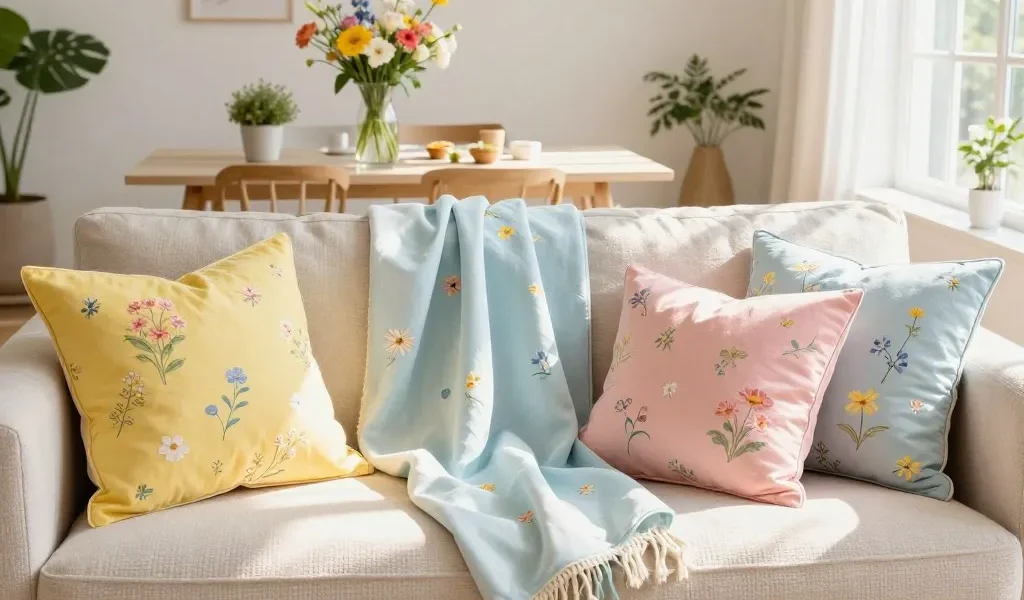
I love spring. Each year I use the season as an excuse to give my rooms a seasonal home refresh that feels fresh and practical. In this guide, I share spring decorating ideas for the home that are easy to do, kind to a budget, and styled for everyday life in the United States.
My approach mixes calm research and retail signals. Publications like Better Homes & Gardens and Country Living show rising interest in spring home decor, while retailers such as Target, IKEA, and HomeGoods highlight lightweight textiles, florals, and plants in their new collections this time of year.
Which Home Upgrade Does Your Space Really Need?
Answer 5 quick questions to discover the ideas that will work best for your home.
I also lean on psychological findings summarized by the American Psychological Association and wellness coverage that link small environment changes to better mood and focus. That means a seasonal home refresh can do more than look pretty — it can feel better to live in.
The article is organized into ten practical sections. I cover mood and mindset, color and textiles, plants, DIY projects, furniture flow, table and entry styling, thrifted finds, and a final recap. Each section delivers actionable spring decorating tips you can use right away.
Why spring decorating matters for a fresher home
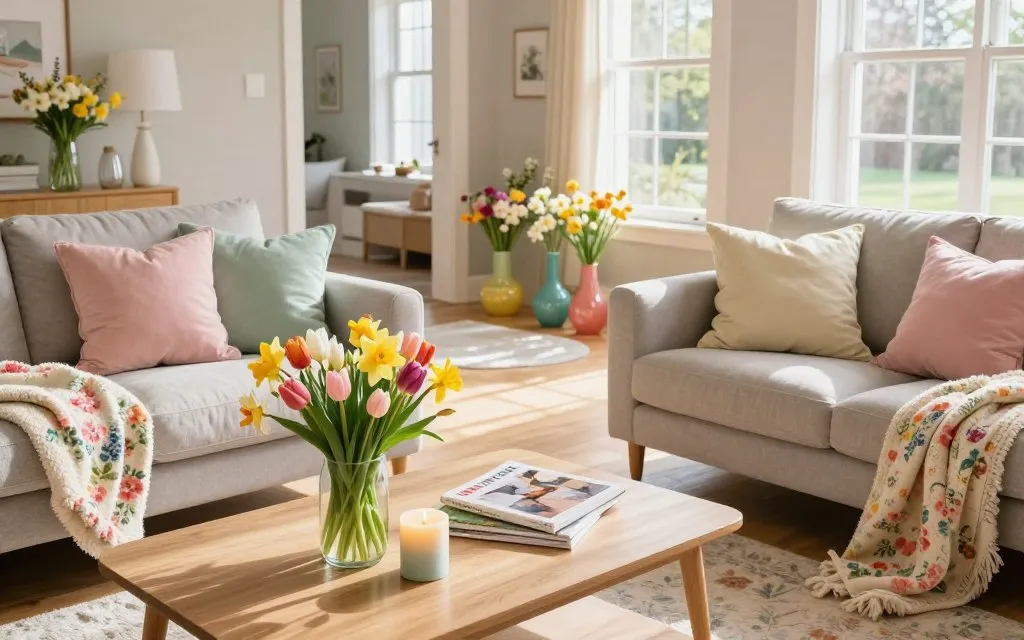
I love the way a few well-chosen swaps can change how a room feels. Spring cleaning is a ritual, yet spring decorating brings a purposeful mood shift. The benefits of spring decorating go beyond looks; they help reset routines and invite more light, air, and activity into daily life.
benefits of spring decorating
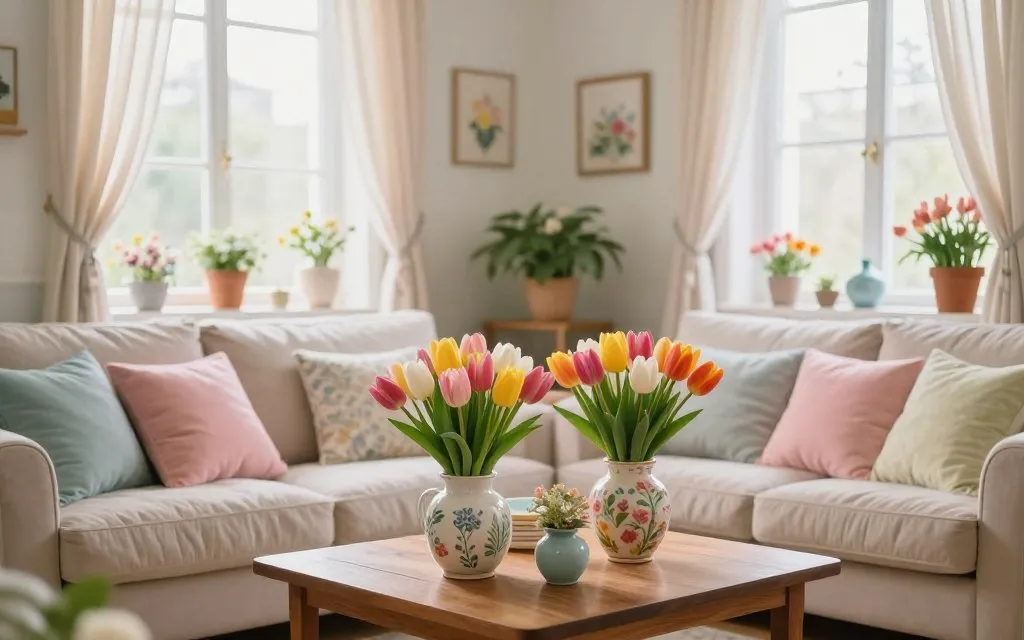
I review research from environmental psychology and lifestyle outlets like Psychology Today and Real Simple when I plan updates. The seasonal refresh benefits include lower stress, clearer thinking, and a lift in creativity. Changing surroundings signals the brain that a new phase has begun, which supports better habits and well-being.
I focus on small home updates that deliver the most visual return. Swapping pillows, throws, rugs, and a few pieces of artwork leans on scale, repetition, and a clear focal point to transform a room fast. Lighter fabrics and brighter accents make spaces feel airy without a full renovation.
I choose affordable spring decor that stretches my budget. Retail cycles at Target, HomeGoods, and local consignment shops mean winter markdowns and fresh spring arrivals. Garage sales and thrift stores often yield unexpected finds, so inexpensive choices can look deliberate and curated.
My practical takeaway is to think incremental and strategic. Prioritize low-cost, high-impact moves that match your style and spending limits. Small home updates build momentum, and the seasonal refresh benefits keep you motivated to enjoy a fresher, more welcoming home.
Spring decorating ideas for the home
I love using small swaps to make rooms feel lighter and brighter. Start with fabrics and a simple plan. A few targeted changes can refresh a living room, bedroom, or entryway in a weekend.
spring textiles
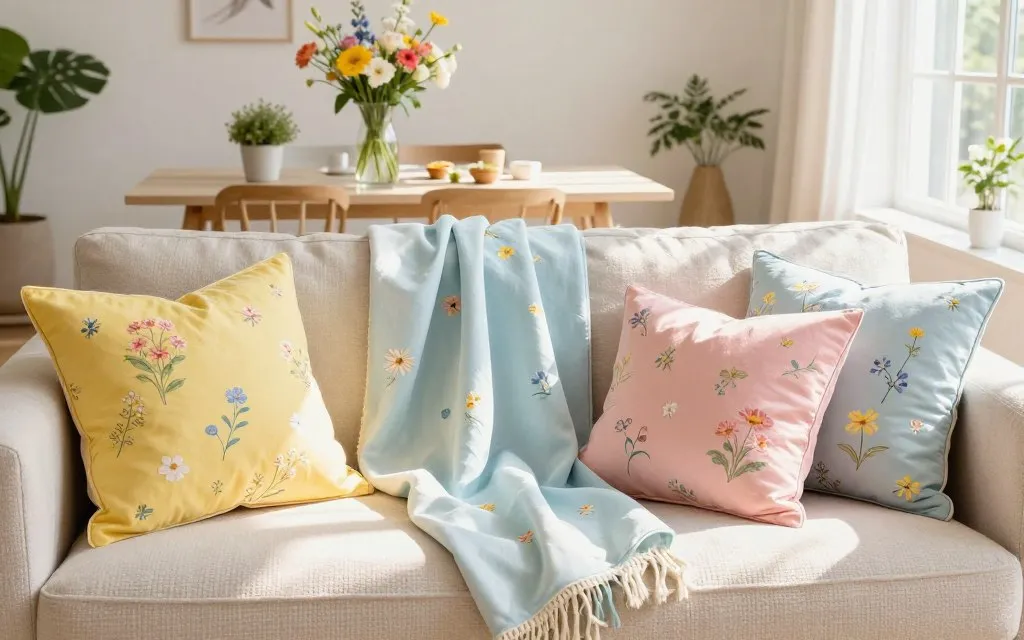
I recommend replacing heavy wool throws and velvet with breathable options. Linen slipcovers, cotton duvet covers, lightweight area rugs, and sheer curtains work well. I often shop Pottery Barn, West Elm, and Target for reliable, seasonal pieces that last.
Lightweight textiles to swap in for the season
Begin with seasonal fabric swaps for easy impact. Swap thick blankets for gauzy throws and trade dense drapes for airy sheers. A cotton duvet, linen slipcover, and a low-pile cotton rug make rooms feel fresher without a big investment.
Adding floral patterns without overdoing it
Floral decor ideas work best when used sparingly. Try an accent pillow, a single upholstered chair, wall art, or small botanical prints. In small rooms, pick small-print florals. For large sofas, a bold bloom makes a confident statement. Balance florals with solids or thin stripes to avoid cluttered visuals.
Layering color strategically for warmth and brightness
Layering color in home decor starts with one neutral and two or three accents. I like soft sage, blush, and buttercup as a palette. Use pillows, vases, throws, and an accent wall to place color thoughtfully.
Follow a 60-30-10 approach for balance. Sixty percent neutral base, thirty percent secondary color, and ten percent an accent. Add texture so colors feel rich rather than flat.
Here is a quick checklist you can use to refresh a room fast:
- Swap pillows and cushion covers
- Replace heavy throws with lightweight knits or gauze
- Change curtains to sheer or linen panels
- Lay down a lightweight area rug or runner
- Add small decor items in your accent hues
| Item | Spring swap | Where to buy |
| Throws | Lightweight cotton or gauze throw | Pottery Barn, Target |
| Slipcovers | Linen slipcover for sofas and chairs | West Elm, Pottery Barn |
| Duvet | Breathable cotton duvet cover | Target, West Elm |
| Rug | Low-pile cotton or jute rug | Pottery Barn, Target |
| Curtains | Sheer or lightweight linen panels | West Elm, Target |
Choosing a spring color palette that energizes your rooms
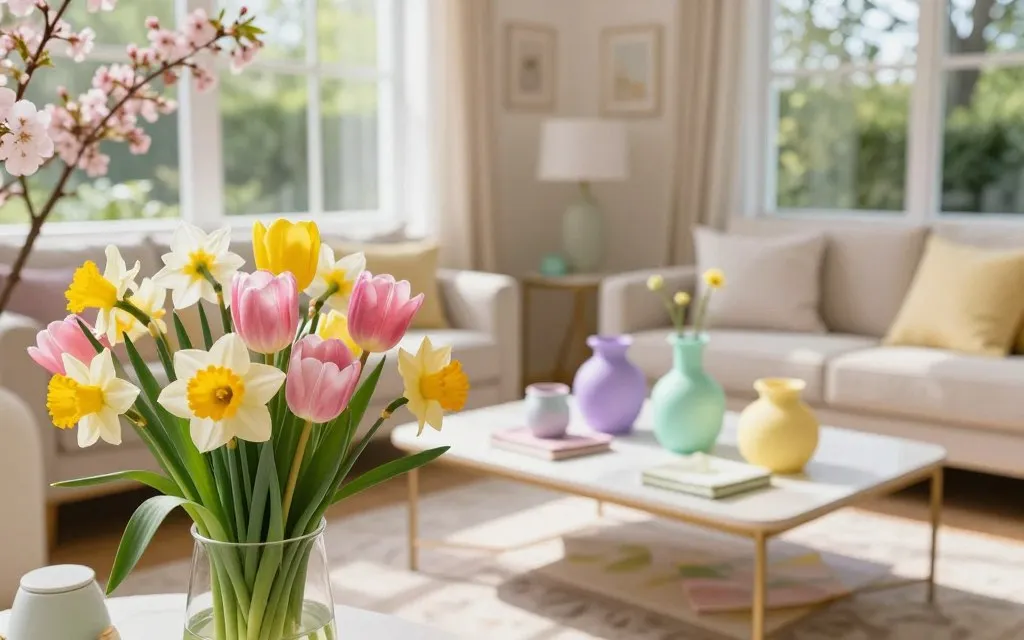
I love starting with a clear spring color palette to guide decisions. A curated set of spring hues makes shopping for paint, textiles, and accessories faster and keeps rooms feeling cohesive.
spring color palette
Trend forecasts from Pantone, Sherwin-Williams, and Benjamin Moore point to soft pastels and fresh greens this season. Think blush pink, mint, butter yellow, sage, fern, sky blue, and coral accents. These spring hues work in living rooms, bedrooms, and entryways.
I recommend pairing tones with contrast and balance in mind. Try sage with terracotta for modern warmth. Blush with navy gives classic contrast. Mint with crisp white feels clean and energetic. Watch saturation so the room avoids feeling too sweet.
Use accent colors for home details to create focal points. Paint a door, window trim, or built-in shelf in a saturated tone to draw the eye. Small architectural elements like crown molding or recessed niches take paint well and add depth without overwhelming the space.
Neutral backdrops for color let your accents pop. Warm whites, soft greys, and creamy beiges act as a canvas. I often reach for Benjamin Moore White Dove or Sherwin-Williams Alabaster. Behr offers similar warm neutrals that pair nicely with brighter spring hues.
Sample before you commit. Test paint on multiple walls and live with fabric swatches at different times of day. Lighting shifts color more than people expect. My rule of thumb: view samples in morning and evening light, and place textiles next to the painted wall to check harmony.
A simple guideline helps me stay on track: choose one dominant neutral backdrop, one mid-tone, and one accent. Repeat those choices in textiles, art, and small decor for a pulled-together look that still feels fresh for spring.
Bringing the outdoors in with seasonal plants
I love how a few well-chosen specimens can change a room. Bringing the outdoors in lifts mood, adds color, and gives texture that fabrics alone can’t match. Below I share simple picks, arranging ideas, and plant care tips that help your home feel fresh all spring.
🎯 Discover Your Home Decor Style
indoor spring plants
Best indoor plants for spring display
I favor easy-care favorites that bloom or look lush. Consider peace lily for glossy leaves and white blooms, snake plant for low-light resilience, pothos and spider plant for trailing shapes, begonias for colorful foliage, and orchids for long-lasting flowers.
I buy healthy specimens at local nurseries and trusted retailers like The Home Depot, Lowe’s, or The Sill. Choosing plants from reputable sources reduces shock and makes acclimation faster.
Flower arrangements that last and look fresh
Spring flower arrangements brighten tabletops without fuss. Use tulips, ranunculus, daffodils, hyacinths, or peonies as focal blooms. For a clean look, pair a single flower type with abundant greenery.
I often arrange loose, garden-style bouquets in mason jars or low vases. To keep stems fresh, change water every two days, recut stems at an angle, and add a floral preservative or a teaspoon of sugar with a splash of white vinegar.
Care tips to keep plants thriving through the season
Good plant care starts with matching light and water to each species. Water when the top inch of soil is dry for most houseplants, but let orchids and succulents have drier intervals. Move plants to brighter spots as daylight increases in spring.
Monitor humidity for tropicals; a pebble tray or occasional misting helps. Watch for pests like spider mites and mealybugs; wipe leaves and treat infestations early with insecticidal soap.
I arrange plants by light needs and group pots on trays to simplify watering. A focal display on an entry console or kitchen island creates an inviting scene that truly brings outdoors in.
Quick and easy spring DIY decor projects
I love small projects that change a room fast. These spring DIY decor ideas fit a weekend, cost little, and refresh an entry or living room without a full overhaul. Below I walk through a simple DIY wreath, ways to upcycle vases and jars, and quick options for handmade pillows and throws.
spring DIY decor
I keep supplies simple and shop at Michaels, Hobby Lobby, Target, or Amazon when I need extras. Each project lists time and cost so you can plan around your schedule and budget.
Create a simple wreath
I start with a grapevine base, faux or dried florals, a few winner branches, floral wire, and a ribbon. For supplies I often pick stems at Michaels or order on Amazon. Steps:
- Lay the grapevine base flat and tuck greenery stems into the twists to form a focal area.
- Secure with thin floral wire, then add floral clusters and filler branches for depth.
- Tie a ribbon at the top for hanging and trim any stray stems.
Time: 30–60 minutes. Cost: $15–$40 depending on florals. For a minimalist look use only greenery. For a cheerful entry choose bright florals and a wide ribbon.
Upcycle vases and jars
Upcycling transforms mason jars, pickle jars, or thrifted vases into season-ready vessels. Try chalk paint for a matte finish or metallic spray paint for glam. Add ribbon, twine, or a band of washi tape for texture.
- Clean and sand glass lightly. Prime if using metallics.
- Apply chalk paint in thin coats for an even matte look. Seal with clear coat for durability.
- Wrap twine or ribbon near the neck and glue with a hot glue gun.
Time: 20–45 minutes plus drying. Cost: $3–$20 per piece if you reuse jars. Seal painted surfaces and work in a ventilated area to stay safe and avoid fumes.
Handmade pillows and throws
I use cotton canvas, linen, or printed quilter’s cotton from Joann Fabrics for easy sewing. No-sew options use fabric glue or fusible web to make an envelope-style pillow cover in minutes. Add pom-pom trim or a bit of simple embroidery for personality.
- Cut fabric to size with 1/2″ seam allowances. For envelope backs, cut two overlapping panels for the back closure.
- Sew edges or fuse hems with fusible web for no-sew assembly.
- Insert an 18″ pillow form and topstitch if desired.
Time: 30 minutes to 2 hours. Cost: $10–$35 per pillow depending on fabric and trim. Using thrifted textiles cuts cost and waste.
Safety and sustainability matter to me. I always ventilate when painting and choose thrifted or recycled materials when possible. These simple projects help me refresh my home with seasonal charm while keeping cost and waste low.
Refreshing furniture placement and room flow
I walk into a room and imagine how light moves through it. Small shifts in furniture create big changes in how a space feels. Below I share practical furniture placement tips and small-space decorating ideas that make rooms feel open, bright, and easy to live in.
How to rearrange for better light and conversation
I start by orienting seating toward windows to capture daylight and views. Arrange sofas and chairs in a conversational grouping so faces are within sight of one another. Use a rug to define that zone and keep pathways clear.
Measure before you move. Leave about 18 inches between a coffee table and seating for comfy reach and walking space. Place a mirror opposite a window to amplify light and reflect a pleasant view.
Small-space tips to maximize spring openness
I favor multifunctional furniture like storage ottomans and nesting tables to reduce clutter. Floating shelves free floor space while giving display room for plants and books. Choose lighter-weight pieces to create a breezy feel.
Think vertically to draw the eye up. Tall plants, stacked art, and narrow bookcases make ceilings feel higher and floors less crowded. In my experience, editing down accessories clears visual noise and improves room flow.
When to swap or reupholster versus when to rearrange
I weigh cost, sustainability, and the piece’s condition when deciding whether to reupholster. A high-quality frame with intact springs often benefits from new fabric. Reupholstering can cost between $500 and $2,000 for sofas depending on fabric and labor. Buying a new sofa can run higher and creates more waste.
Slipcovers or adding an accent chair offers a faster, lower-cost refresh. Choose to swap when the frame is damaged or when a different scale suits the room better. Keep sentimental value and long-term use in mind when deciding when to reupholster.
Simple three-step plan to test arrangements
1. Assess: Walk the room, note light sources, and mark high-traffic paths. 2. Measure: Tape the dimensions of furniture and passageways. 3. Move: Try one change at a time and live with it a day before committing.
This short process helps you apply furniture placement tips without overspending. I recommend photographing each layout so you can compare and choose the best option for room flow and spring openness.
Seasonal table and entryway styling ideas
I love using small touches to shift the mood of my home for spring. A seasonal vignette at the front door and a fresh spring table centerpiece can refresh daily routines. Natural textures bring warmth and a tactile feel that ties both spaces together.
Create a welcoming spring entry vignette
I stage my console with a round mirror or an art print above it and a seasonal wreath on the door. A shallow tray holds keys and sunglasses so clutter stays contained. I place a small plant or a bouquet in a simple vase for an instant lift.
I keep a woven basket nearby for shoes or umbrellas. For shopping, I look at Crate & Barrel for clean ceramics, World Market for budget-friendly baskets, and local artisan markets for one-of-a-kind pieces that add personality.
Table centerpieces that balance beauty and function
My go-to is a low floral arrangement so guests can talk across the table. Mixed-material centerpieces pair glass vases, stone candle holders, and sprigs of greenery for contrast. A bowl of seasonal fruit works well for everyday dining.
For longevity, I use floral foam or individual water tubes for stems. I keep a small kit with scissors, floral tape, and replacement water tubes near the table for quick refreshes.
Using trays, bowls, and natural elements for texture
I layer trays to corral items and create neat groupings. Rattan or seagrass trays add soft texture while a stone bowl offers a cool counterpoint. Decorative bowls hold lemons, faux nests, or wrapped soaps as seasonal accents.
Fresh or faux branches add vertical interest without crowding the surface. I balance heights so the centerpiece reads as a cohesive seasonal vignette rather than a cluttered display.
Quick swaps help the transition between holidays or between indoor and outdoor dining. A single change, like swapping a vase or adding a rattan charger, shifts the look with little effort. Keeping a few versatile pieces on hand makes spring styling feel easy and repeatable.
| Styling Element | Suggested Materials | Practical Tip |
| Entry vignette | Mirror or art, wreath, tray, small plant, woven basket | Place tray near the door for keys; basket for shoes keeps floors tidy |
| Table centerpiece | Low floral arrangement, candles, fruit bowl, glass vase | Use floral foam or water tubes to extend flower life |
| Textural accents | Rattan tray, seagrass placemat, stone bowl, faux branches | Layer trays to corral items and mix textures for balance |
| Seasonal swaps | Change wreath, swap linens, add citrus or blossoms | Make one swap to change mood without replacing core pieces |
Decorating on a budget: thrifted finds and smart swaps
I keep spring decorating practical and playful by mixing savvy shopping with small upgrades. A few well-timed buys and a couple of weekend projects refresh my rooms without a big bill. I aim for a capsule approach: solid basics, then seasonal accents that change each spring.
I shop where good value shows up. Local thrift stores, Habitat for Humanity ReStore, Facebook Marketplace, OfferUp, estate sales, and clearance racks at Target, IKEA, and HomeGoods are my go-tos. I look on weekend mornings and at end-of-season sales for the best picks.
Where I look for affordable spring decor
Thrifted home decor yields unexpected treasures. I check donation-based shops for lamps and ceramics, and I scan online listings for frames and small tables. Estate sales can have higher-end pieces at fair prices, while clearance racks give me brand-new items for less.
How to upcycle thrifted pieces for a fresh look
To upcycle furniture I start with a simple plan: clean, sand, and pick a finish. Sanding and painting small tables transforms them fast. I use Rust-Oleum for durability and Annie Sloan chalk paint for a soft, vintage finish.
I replace hardware on dressers to modernize their look. New knobs from Anthropologie or Amazon can change a piece overnight. For chairs I re-cane or recover cushions using fabric from Joann. These steps help me upcycle furniture into something that feels new.
Investment pieces worth buying for repeated seasonal use
I spend more on items that serve year-round. A neutral, high-quality sofa anchors the living room. An outdoor dining set pays off if I entertain outside. Sturdy area rugs and multiuse storage last through many refreshes.
When I evaluate seasonal investment pieces I focus on durable materials, timeless design, and adaptability. Neutral colors and removable covers make it easy to layer spring accents without replacing the base pieces.
| Category | Where I Shop | Quick Update | Why It’s Worth It |
| Small tables | Thrift stores, Facebook Marketplace | Sanding + Rust-Oleum or chalk paint | Inexpensive focal pieces that adapt to color swaps |
| Dressers & chests | Estate sales, ReStore | New knobs from Anthropologie or Amazon | Immediate style lift with little cost |
| Seating (chairs, cushions) | OfferUp, thrift shops, Joann fabric | Re-caning or recover cushions | Comfortable, custom look for minimal spend |
| Rugs & sofas | Clearance racks, IKEA, HomeGoods | Neutral selection; add seasonal rugs or throws | Core pieces that support multiple seasons |
| Outdoor dining | Clearance sales, ReStore | Clean and seal metal or wood finishes | Entertaining staple that raises home value |
To save more I buy fewer, better basics and refresh with thrifted home decor for seasonal flair. I track purchases for resale potential and swap items with friends when possible. These practices keep my budget spring decorating fresh year after year.
Conclusion
I’ve walked through practical spring decorating ideas for the home so you can refresh your space without overwhelm. Start small: swap lightweight textiles, introduce one or two plants, and pick an energizing color palette that feels right for your rooms.
Try a simple DIY project, make a quick centerpiece, and rearrange furniture to boost light and flow. These incremental moves add up into a meaningful spring home update that’s affordable and fun.
For more inspiration, I often turn to Better Homes & Gardens, Apartment Therapy, and retailer lookbooks from West Elm and Pottery Barn. Local nurseries and hardware stores are great for hands-on help when you need materials or plant advice.
My challenge: pick one idea and try it this weekend. Share your results with friends or on social media to stay motivated—small steps will build a refreshed, livable home you enjoy every day.
FAQ
What are the easiest swaps to make my home feel like spring without spending much?
I start with textiles because they offer the biggest visual change for the least money. Swap heavy wool throws and velvet pillows for cotton, linen, or lightweight knits. Add a sheer curtain or a lighter-area rug, and change pillow covers—no need for new furniture. I often shop Target, IKEA, and HomeGoods for budget-friendly options and check thrift stores for pieces I can upcycle.
How can I pick a spring color palette that feels fresh but not overly sweet?
I choose a neutral backdrop—warm white or soft gray like Benjamin Moore’s White Dove or Sherwin-Williams Alabaster—then add two or three accent hues. Pairings I like: sage + blush + buttercup, or mint + white + coral. I follow the 60-30-10 rule (dominant, secondary, accent) and mix textures so colors don’t feel flat.
Which indoor plants work best for a spring display if I don’t have a green thumb?
I recommend low-maintenance picks: pothos, snake plant, spider plant, and peace lily. For blooms, begonias and orchids give seasonal interest with minimal fuss. I buy healthy specimens at local nurseries, The Home Depot, Lowe’s, or The Sill, and group plants by light needs to simplify care.
How do I create a spring centerpiece that’s both pretty and practical?
I keep centerpieces low so conversation flows. A small arrangement of tulips or ranunculus in a low vase works well, or a tray with a candle, a small potted plant, and a bowl of lemons for everyday tables. Use floral foam or water tubes for longer life and swap elements seasonally for variety.
What small DIY projects give the best payoff for a weekend effort?
Simple projects with big impact include a grapevine wreath with faux or dried florals, painted or metallic-upcycled vases, and no-sew envelope pillow covers with pom-pom trim. These take 30 minutes to a couple of hours, use supplies from Michaels or Joann Fabrics, and cost very little when you repurpose thrifted materials.
When should I rearrange furniture versus buying or reupholstering pieces?
I always try rearranging first—orient seating toward windows, define zones with rugs, and use mirrors to bounce light. If the frame is in good shape, reupholstering a quality sofa is more sustainable and often cheaper long term. If the piece is beyond repair or you need a new layout, swapping in a neutral, multiuse item is the faster fix.
How can I introduce floral patterns without overwhelming a small room?
I use florals as accents: pillows, a single upholstered chair, or small botanical prints. Choose smaller-scale prints for compact spaces and balance them with solids and stripes. Keeping the rest of the palette neutral helps the floral feel intentional, not cluttered.
Where do you look for affordable spring decor and the best times to shop?
I hunt at local thrift stores, Habitat for Humanity ReStore, Facebook Marketplace, and weekend estate sales. Retailers like Target, IKEA, and HomeGoods are great during end-of-season sales. I shop weekend mornings and watch for clearance racks when stores roll out spring collections.
What investment pieces are worth buying if I want a spring-ready home every year?
I invest in a neutral, high-quality sofa with removable covers, sturdy area rugs, and a durable outdoor dining set if I entertain outside. These pieces anchor multiple seasons and make it easy to refresh with inexpensive accents each spring. Timeless materials and classic silhouettes resell well, too.
How do I care for spring flowers and arrangements so they last longer?
I trim stems at an angle, change water every two days, and use floral preservatives. For garden-style bouquets, remove foliage below the water line to prevent bacteria. Keep arrangements away from direct heat and drafts to extend bloom life.
Can I refresh a room quickly on a tight budget and still get a designer look?
Yes. I focus on a few high-impact swaps: pillows and throws, a new rug, a statement plant, and a well-styled vignette on a console or coffee table. Upcycle thrifted pieces with paint and new hardware, and use trays and bowls to create layered, curated looks without spending much.