
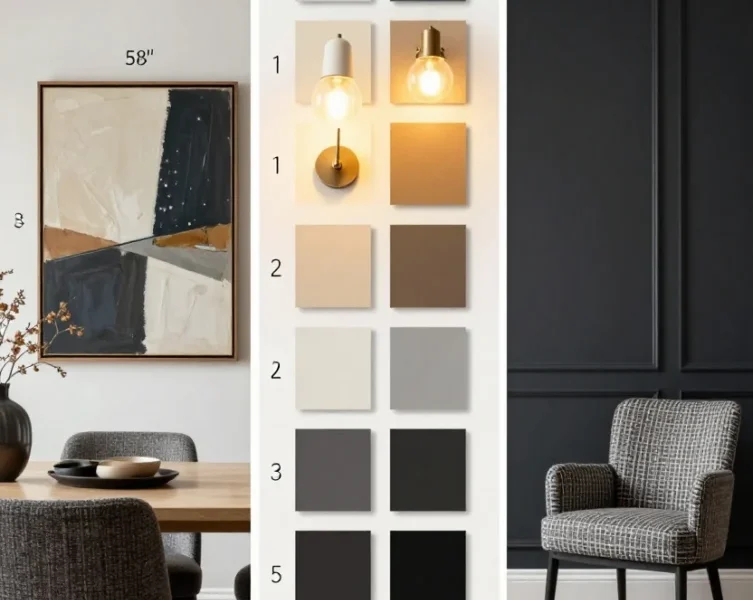

Your dining room deserves a moment that stops conversation—then starts better ones. The right accent wall can electrify a space without shouting, if you know how to work scale, light, and texture. Below, you’ll find refined dining room accent wall ideas that add character and make every meal feel like a special occasion.
Whether you’re refreshing a city apartment or elevating a family home, these strategies blend contrast, craftsmanship, and considered styling to deliver more presence for your dining zone. Each idea is grounded in real design reasoning—how materials catch evening light, how proportions affect mood, how color temperature plays with candle glow—so you can create an accent wall that looks tailored, not temporary.
1. Sculpted Millwork That Frames the Table Scene
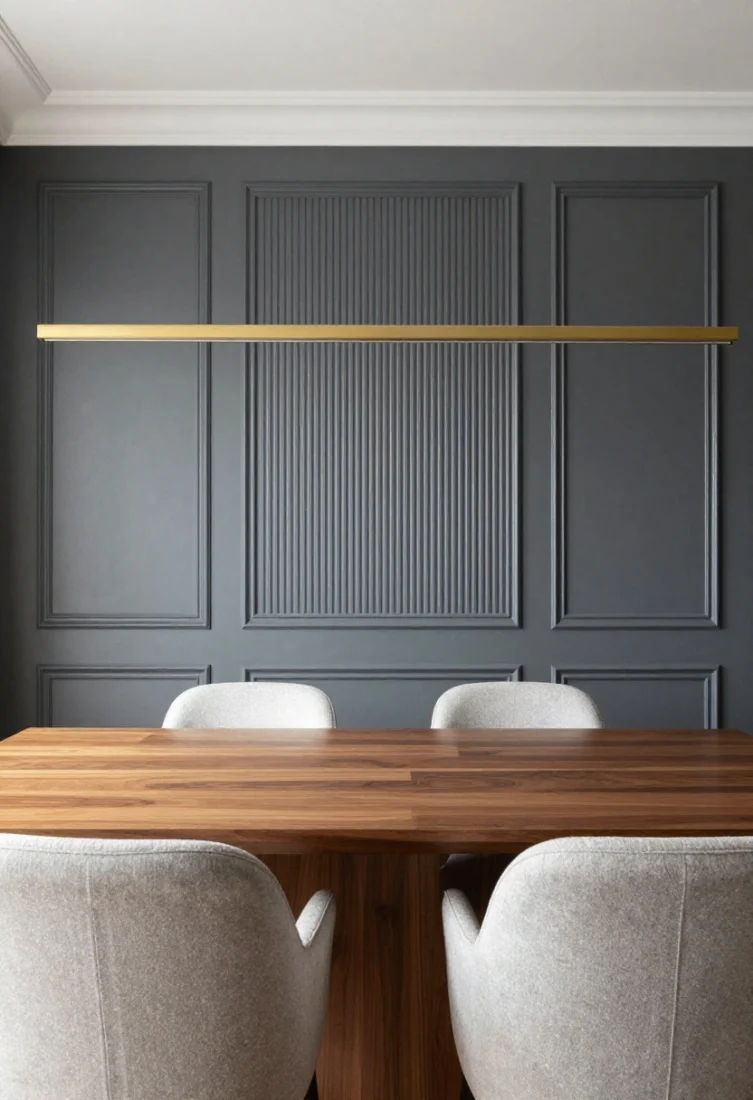
Architectural millwork—think panel molding, picture-frame trim, fluted cladding, or board-and-batten—gives an accent wall gravitas. It introduces depth and shadow, which read beautifully with layered lighting at night. Use millwork to “stage” the dining table: the wall becomes a discreet proscenium that centers the setting and elevates the ritual of gathering.
Which Home Upgrade Does Your Space Really Need?
Answer 5 quick questions to discover the ideas that will work best for your home.
Why it works
- Contrast and texture: The play of light across raised profiles adds quiet drama without relying on bold color.
- Proportion: Vertical fluting can visually heighten ceilings; wider battens can widen the room.
- Balance: Structured lines counter the fluid forms of upholstered chairs and drapery.
How to execute
- Run panel molding slightly wider than the table to keep the composition cohesive.
- Paint millwork and wall in the same satin finish for a modern monochrome effect, or contrast a soft eggshell wall with semi-gloss trim for definition.
- Mount a linear picture light above the central panel to softly graze the surface.
Avoid: Overly busy patterns of trim; stick to a rhythm that complements, not competes with, your chandelier.
Shopping cues: molding and trim profiles, panel molding kits, picture lights, paint in coordinating sheens, stud finder, miter saw.
2. Sophisticated Color Saturation With a Touch of Sheen
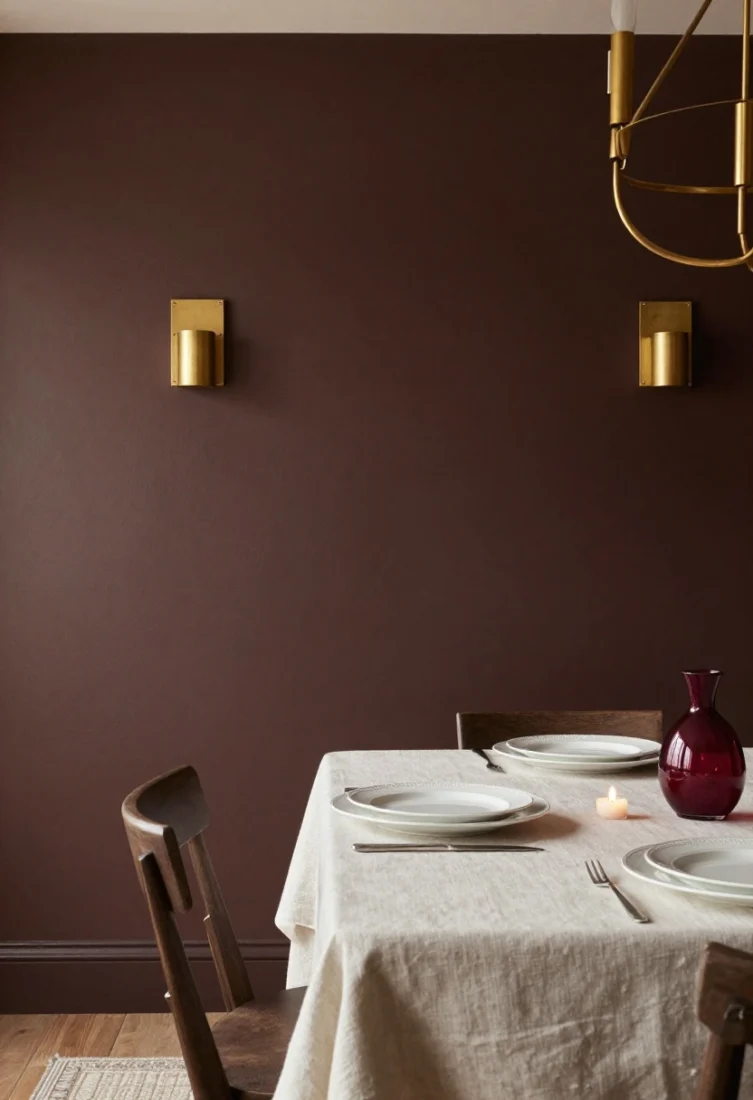
A deeply saturated paint on a single wall can transform the dining area into an evening-ready enclave. Think smoky olive, merlot, petrol blue, or browned plum. In ambient light, these tones feel intimate; by day, they add polish without overwhelming the room.
Why it works
- Scale and mood: A bold hue anchors a long table and carves a distinct zone within open-concept plans.
- Color temperature: Warm-leaning darks pair well with candlelight and brass accents; cooler darks love chrome and crystal.
- Contrast control: Saturated walls make pale linens, art, and place settings pop.
How to execute
- Choose an eggshell or matte finish to let the color absorb light luxuriously; reserve satin for easy-clean needs.
- Echo the wall color in small doses—napkins, a ceramic vase, or a velvet cushion—to feel curated, not matchy.
- Install dimmable sconces on the feature wall to keep light low and flattering.
Avoid: Pure black unless you have abundant daylight and robust layered lighting. Opt for near-black hues that carry undertones.
Shopping cues: premium interior paint, wall sconces, dimmer switches, wall art with generous matting, brass picture rails.
3. Textural Stone or Slab for Natural Drama
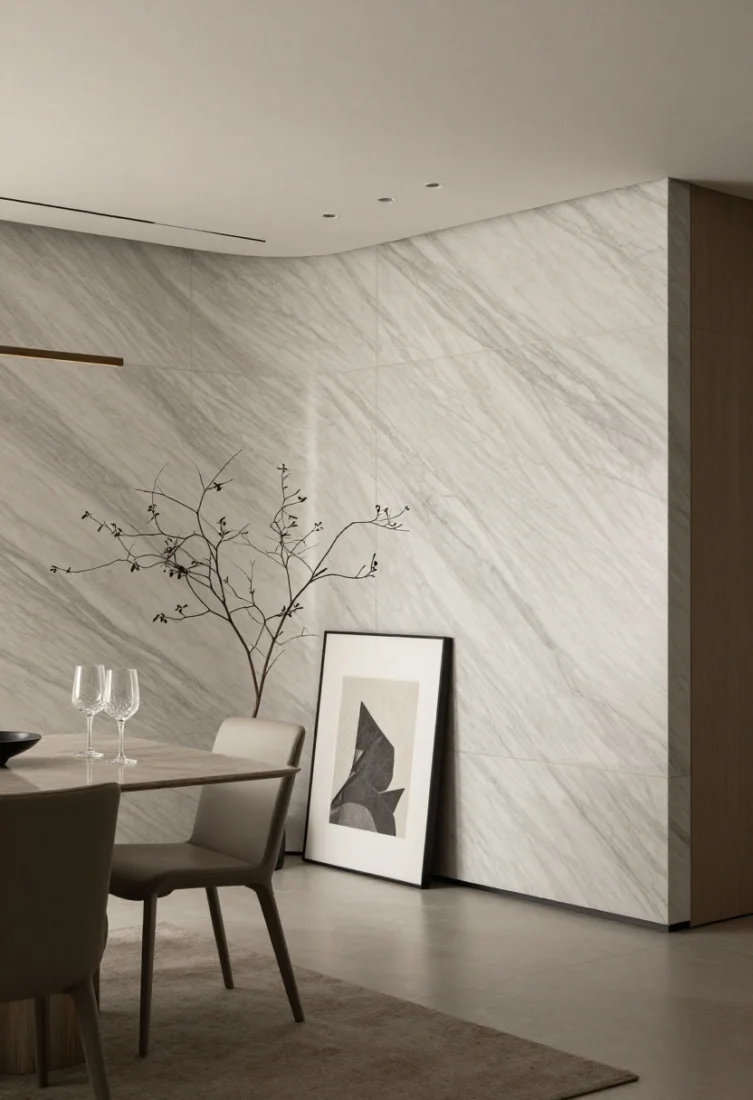
Cladding the accent wall in stone—marble, travertine, limestone, or porcelain slab—delivers instant architecture. Veining introduces movement, while honed finishes read soft and tactile. This is a gourmet backdrop for entertaining: glamorous, enduring, and photogenic.
Why it works
- Texture and light: Honed stone diffuses glow, making crystal glassware and metallic cutlery sparkle in contrast.
- Scale: Large-format slabs minimize grout lines for a serene, gallery-like effect.
- Balance: Organic patterns offset the geometry of a rectangular table.
How to execute
- Bookmatch veining if possible; the mirrored effect feels bespoke and anchors the room.
- Pair with slimline picture lights or discreet ceiling spots angled to graze the surface.
- Keep styling disciplined—one overscale artwork, a sculptural console, or a simple branch arrangement.
Avoid: Highly polished finishes in small rooms; glare can flatten the space. Choose honed or leathered to enhance depth.
Shopping cues: stone or porcelain slabs, stone sealer, low-profile consoles, uplights, felt pads for furniture.
4. Patterned Wallcoverings That Whisper Luxury
🎯 Discover Your Home Decor Style
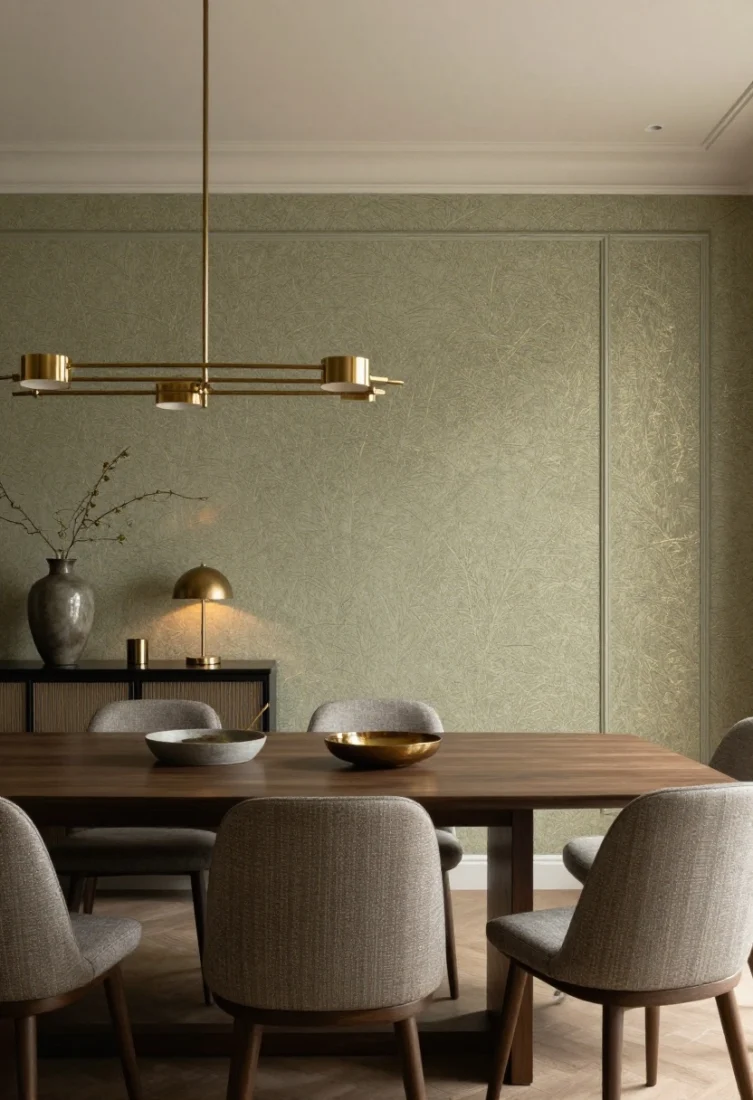
Wallpaper is a fast track to character. From hand-painted panels to grasscloth or contemporary geometrics, it lets you layer color and motif with finesse. In dining rooms, consider patterns that reward close inspection but don’t overwhelm conversation.
Why it works
- Texture: Grasscloth and silk papers add fiber and warmth that balance hard surfaces like wood floors and stoneware.
- Scale mastery: Medium-scale prints read best behind a table and sideboard—large enough to register, restrained enough not to buzz.
- Lighting synergy: Subtle metallic inks catch candlelight and add dimension after dark.
How to execute
- Frame a mural paper within molding to control scale and create a “panel art” effect.
- Color-match ceiling paint to a hue within the paper for a cocooned, custom feel.
- Let one key piece—chandelier, buffet lamp pair, or a statement vase—echo the pattern’s tone or motif.
Avoid: Busy, high-contrast small prints if your dining set features ornate chair backs or heavy carving—the clash will feel restless.
Shopping cues: grasscloth wallpaper, hand-painted murals, paste and smoothing tools, coordinating trims, buffet lamps, linen table runners.
5. Art-Led Walls With Gallery Lighting
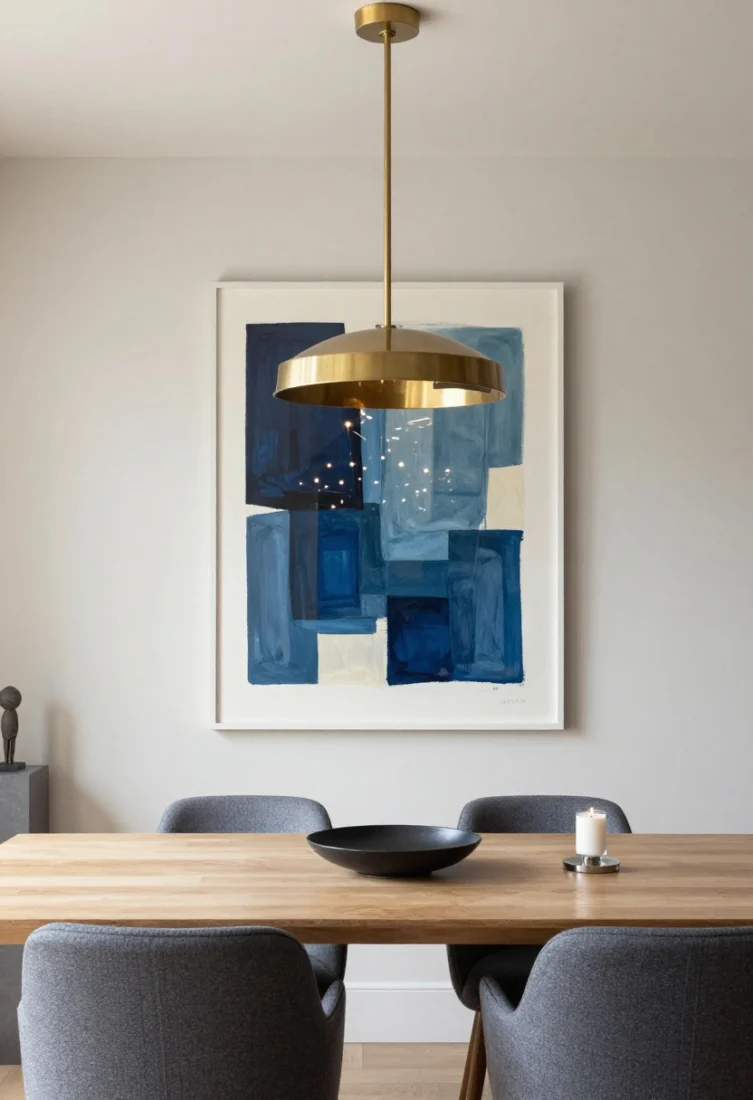
Make art the accent. A single large-scale piece—abstract, photographic, or mixed media—can carry a dining room with quiet authority. Alternatively, a disciplined grid of framed works introduces rhythm and symmetry, creating a refined backdrop that sets the tone for the table.
Why it works
- Focus and proportion: One statement piece prevents visual clutter and supports conversation.
- Balance: A grid balances long tables and reinforces formality; a diptych softens a tight room with negative space.
- Lighting: Dedicated art lights add layers without glare and direct eyes toward the accent wall.
How to execute
- Mount the artwork’s center around 57–60 inches from the floor for seated sightlines.
- Use non-glare acrylic or museum glass to avoid reflections from pendants and candles.
- Choose warm 2700–3000K bulbs with high CRI to render colors beautifully.
Avoid: Hanging artwork too high relative to the chair backs; it disconnects the composition from the dining set.
Shopping cues: oversized framed art, gallery frames, picture lights, high-CRI LED bulbs, pedestal plinths for sculpture.
6. Wood Cladding for a Tailored, Clubby Atmosphere
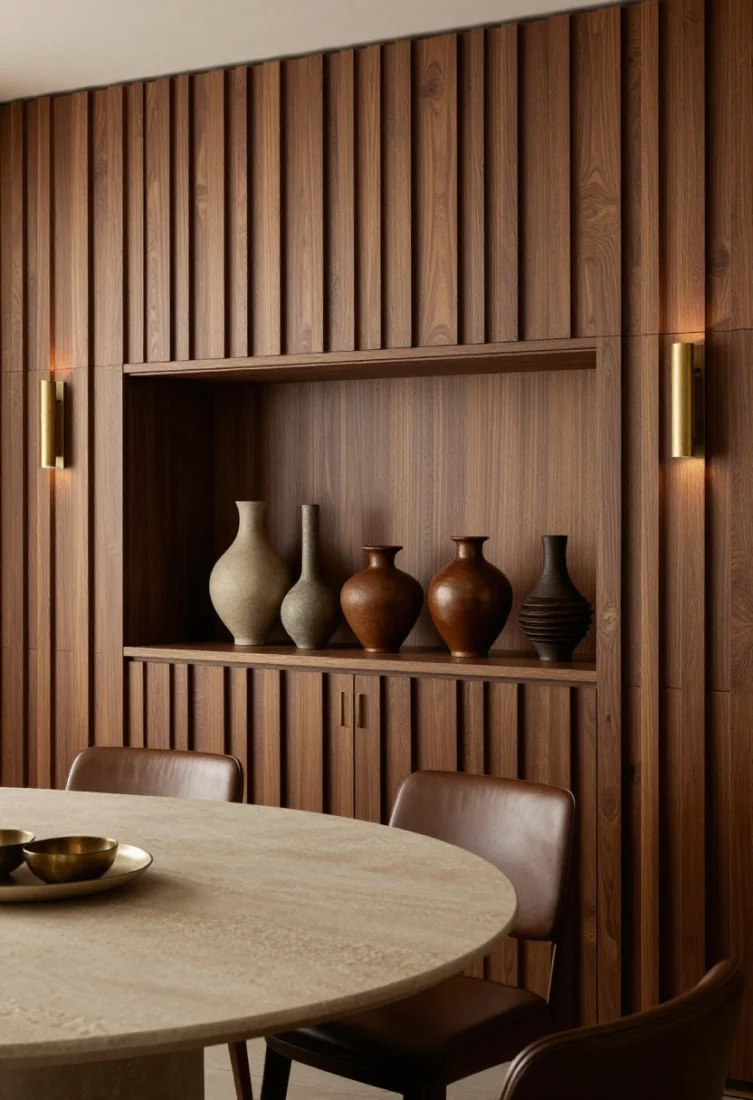
Wood brings warmth, soul, and quiet luxury. From walnut veneer panels and slatted oak to smoked eucalyptus, the right wood tone can make the dining room feel curated and intimate. The grain adds movement that’s subtle yet satisfying.
Why it works
- Tactility: Wood absorbs sound and softens acoustics—ideal for lively dinners.
- Contrast: Pairing rich timber with stone, leather, and metal creates a layered, high-end mix.
- Scale and rhythm: Vertical slats elongate walls; oversized planks feel modern and calm.
How to execute
- Run slats floor-to-ceiling for height; conceal a slim ledge within the cladding to display a rotating curation of vessels.
- Commit to warm metals—aged brass or bronze—for fixtures and cabinet hardware to harmonize undertones.
- Finish with a matte hardwax oil to maintain the wood’s natural character.
Avoid: Orange or overly red stains if your flooring already leans warm; aim for tonal sophistication, not a timber overload.
Shopping cues: wood slat panels, veneer sheets, hardwax oil finishes, wall washers, sculptural vases, linen placemats.
7. Mirrored or Antiqued Glass to Amplify Light
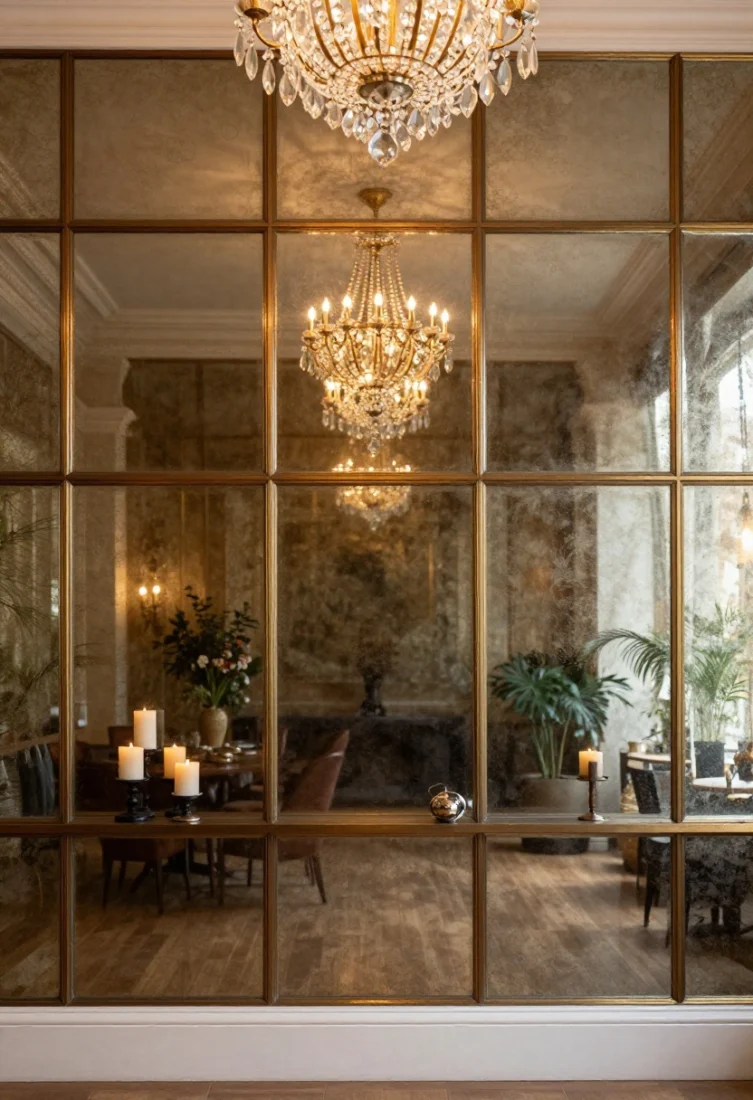
Mirrors are the hospitality industry’s favorite dining secret for a reason: they double the glow. An antiqued mirror panel or a set of mirror tiles along the accent wall bounces candlelight and chandelier sparkle, adding depth without overwhelming with color or pattern.
Why it works
- Lighting: Mirrors amplify layered lighting and make evening settings feel opulent.
- Space perception: They visually enlarge tight dining nooks and reflect greenery or art from the opposite wall.
- Balance: Antiqued finishes mute reflections, avoiding a literal “mirror wall” effect.
How to execute
- Use antiqued or smoked mirrors for a softly blurred reflection that flatters guests.
- Divide the wall into paneled sections with slim metal trims for an architectural vibe.
- Angle task lighting to graze rather than hot-spot the surface.
Avoid: Perfectly clear, floor-to-ceiling mirrors across from a busy kitchen view; choose patina to edit the reflection.
Shopping cues: antiqued mirror panels, metal edge trims, LED wall washers, console tables, candleholders.
Styling The Scene: Furniture, Lighting, and Layered Details
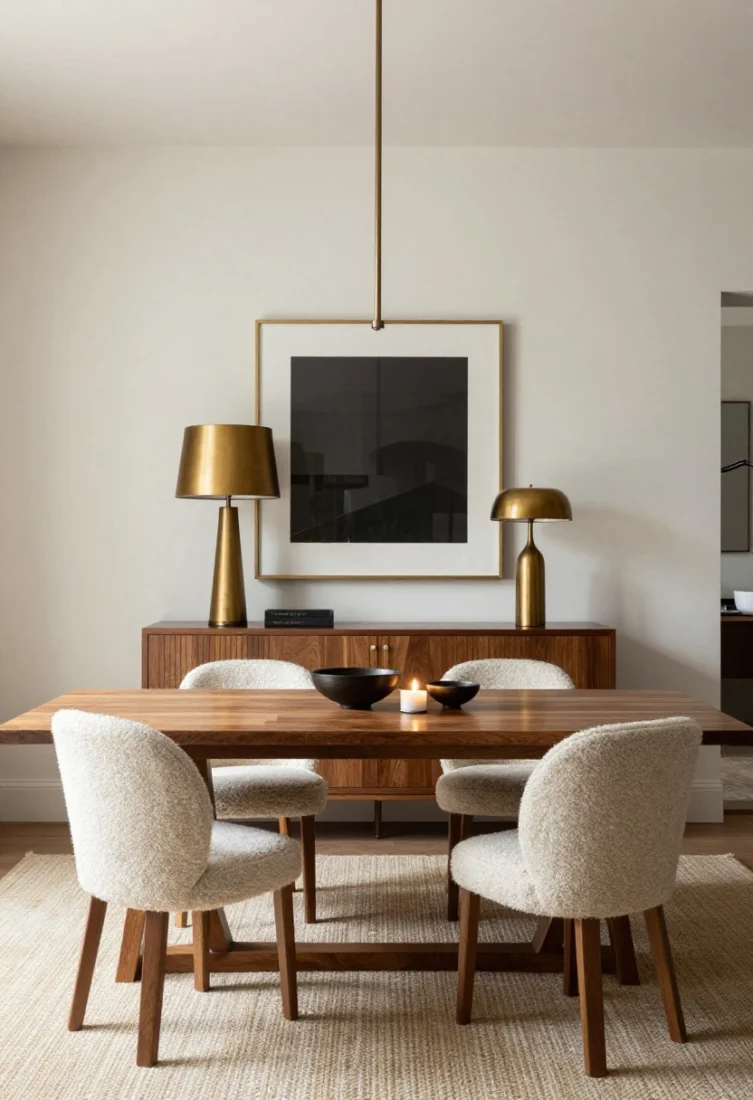
An accent wall is most successful when the supporting cast is equally considered.
- Table and chairs: Keep silhouettes refined. If the wall is highly textured or patterned, choose simple upholstered chairs in textural fabrics like bouclé or mohair to ground the look.
- Rug: Opt for a low-pile wool blend or performance rug large enough to keep chairs on the rug when pulled out; patterns should whisper, not shout.
- Lighting: Layer a statement chandelier with sconces or picture lights, plus candlelight for warmth. Dimmer switches are non-negotiable.
- Storage: A slim credenza or console on the accent wall is practical and sculptural—top with a pair of lamps or a singular art object.
- Wall decor: Consider a restrained curation: one hero artwork, a pair of sconces, or a minimalist ledge with seasonal ceramics.
Common Pitfalls to Dodge
- Scale missteps: Undersized art or too-narrow millwork makes the wall feel accidental. Go larger than you think.
- Lighting gaps: A bold wall without dedicated lighting reads flat at night. Add sconces, picture lights, or wall washers.
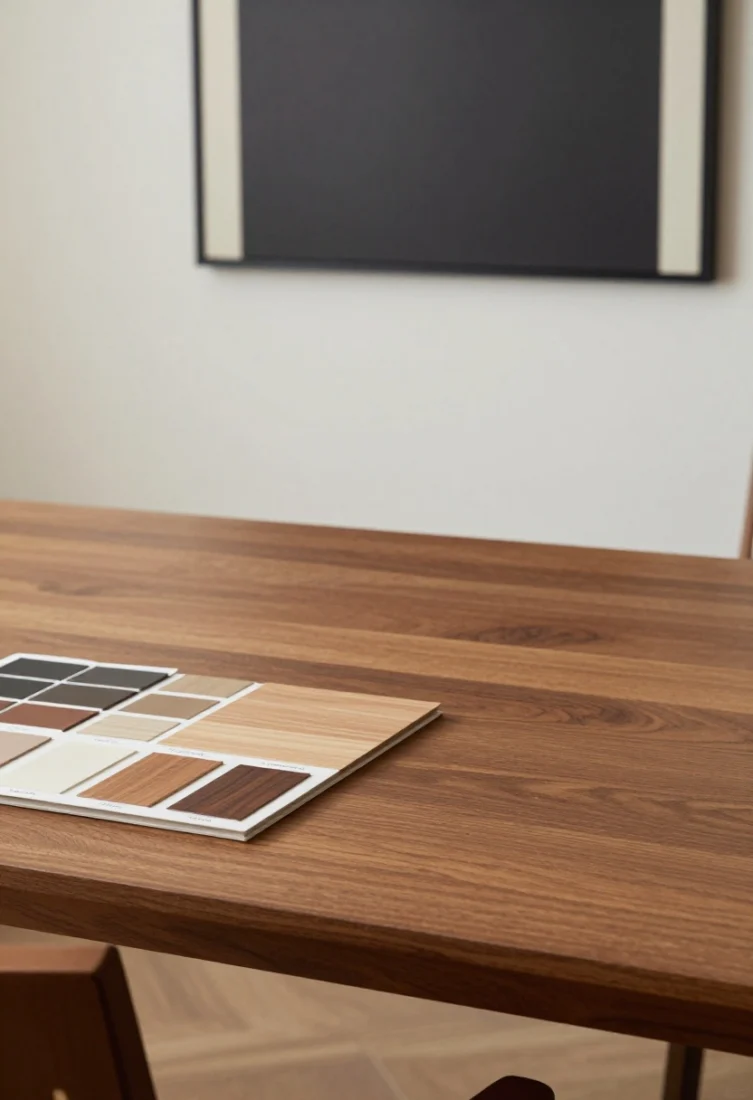
- Undertone clashes: Test paint and wood samples against your flooring and upholstery in day and evening light.
- Over-styling: If the wall is the star, keep tabletop decor edited. Negative space is part of the luxury equation.
Quick Planning Checklist
- Define the role: mood setting, visual anchor, or both.
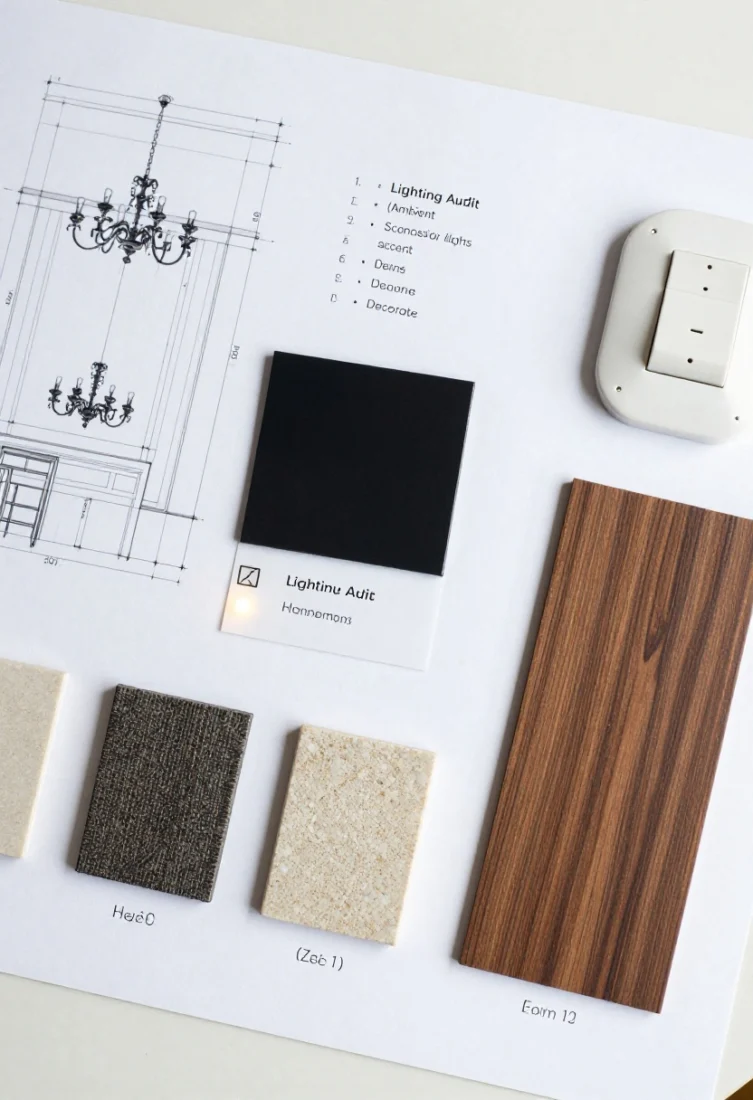
- Audit lighting: ambient (chandelier), accent (sconces/picture lights), and decorative (candles).
- Confirm proportions: map art and millwork with painter’s tape prior to install.
- Test finishes at night to ensure the wall glows, not glares.
- Style minimally, then add one layer at a time.
Conclusion
The most compelling dining rooms share a quiet confidence: a single, intentional gesture that sets mood, flatters light, and respects proportion. Choose one of these dining room accent wall ideas that add character—architectural millwork, enveloping color, refined stone, elevated wallcovering, art-led compositions, supple wood, or antiqued mirror—and build the room around it with disciplined styling and layered illumination. When the wall leads, the rest follows.
FAQ
What size art works best for a dining room accent wall?
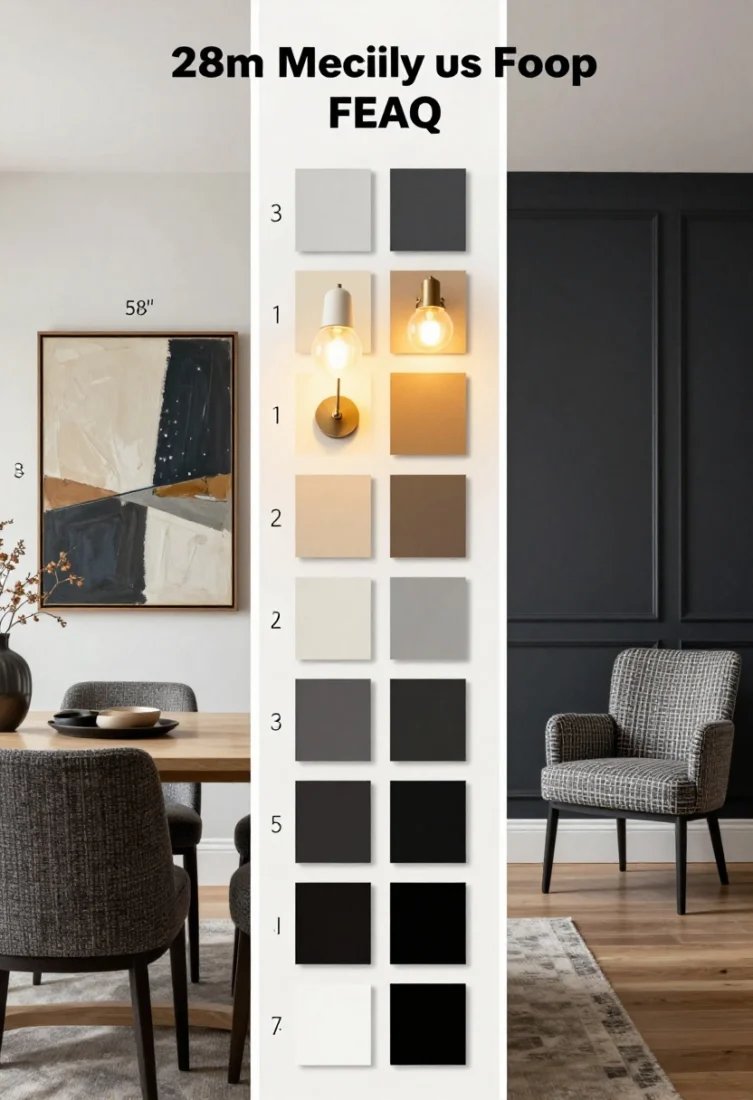
As a rule, choose art that spans at least two-thirds the width of your table. For grids, aim for consistent spacing (around 2 inches) and hang the centerline at 57–60 inches to suit seated sightlines.
How do I choose a paint finish for a dark accent wall?
Matte or eggshell is ideal—both absorb light for a luxe, velvety effect. If wipeability is a concern, consider a high-quality matte or a low-sheen satin and lean on sconces to add depth rather than shine.
Can I mix a bold accent wall with patterned dining chairs or a busy rug?
Yes, but anchor the composition. If the wall is bold, keep chairs solid and textural, and choose a restrained rug pattern. If chairs are patterned, make the wall quieter—monochrome millwork or subtle grasscloth—to maintain balance.
Recommended Products
Disclosure: As an Amazon Associate, this site may earn from qualifying purchases.
These affiliate-ready categories are broad, safe shopping prompts readers can use to build the look without fake pricing or made-up reviews.
- Architectural Millwork — Adds depth and frames the dining table elegantly.
- Bold Paint Colors — Creates an intimate, evening-ready accent wall.
- Stone Cladding — Introduces natural texture and sculptural drama.
- Textural Wallcovering — Brings warmth and subtle pattern without overwhelm.
- Reflective Accent — Amplifies candlelight and visually expands the space.
Shop the Look on Amazon: Give readers a fast path from inspiration to action.
Find Your Style
Answer each question to unlock a quick designer tip for your space.
1. Which change makes a kitchen feel elevated the fastest?
2. What usually makes this style feel more expensive?
3. If you want guests to stay longer, what should you improve first?
Love this style? Get fresh decor ideas every week
Subscribe for weekly home decor trends, room ideas, and curated product inspiration.
What’s new in home decor
Give readers a reason to come back tomorrow: fresh room ideas, new styling trends, and practical product inspiration.
- 14 Bathroom Window Curtain Ideas for Privacy and Style That Feel Effortlessly Luxe
- Grunge Apartment Aesthetic Ideas That Feel Unique: Luxe, Lived-in, and Unapologetic
- 13 Beautiful Porch Swing Ideas to Upgrade Your Outdoor Living
- 13 One-wall Kitchen Ideas That Save Space and Look Amazing
Return daily: refresh your feed, browse new decor ideas, and keep building your next room upgrade step by step.
Some content on this website is created with AI assistance and carefully reviewed and edited by the Nekig team to ensure quality and accuracy.
💬 Join Our Small Space Living & Decor Community
Get daily apartment decor ideas, smart storage hacks, and budget-friendly inspiration from thousands of small space lovers.
👉 Join the Facebook Group
What would you try first?
Invite readers to comment with their favorite idea, their room challenge, or the one update they want to copy from Dining Room Accent Wall Ideas That Add Character: 7 Chic Designer Moves.
Tell us in the comments: Which tip fits your home best right now, and what room should we cover next?